When Nine Inch Snails split up at the end of the Sixth Form, it felt like we were beginning to get somewhere. Not in terms of any real success, of course; we'd only ever played within the school grounds, and it was unlikely that we'd attracted the attentions of anyone beyond our circle of friends. However, the small repertoire of original material we'd built up had given me a taste of being in a band, something at which I was keen to have another bash.
Consequently, when I got to university I was quick to drop into conversation that I played guitar and would really quite like to start a band. This rather backfired when a socially awkward character asked me to play in his industrial combo. I can't remember the guy's name now, but he was possessed of a blank-faced charmlessness which, as it turned out, was allied to an almost-total lack of understanding of how to go about putting a band together. My justification for saying this is that he also approached a guy called Andy to play drums. Now, by his own admission, Andy couldn't play drums, but to our now-nameless friend this was less significant than the fact that Andy was a burly fellow with a Travis Bickle-style mohawk. "All you'll have to do is hit a metal bin with some spanners," was the would-be svengali's advice, which almost says as much about the public perception of industrial music in 1993 as it does about the cretin that uttered those words. I'm surprised he didn't also ask around to see if anyone had any power tools.
It might not surprise you to learn that this band never actually happened.
Instead, I fell in with a group of eager young musicians from Chamberlain Hall. The line-up was Alex on acoustic guitar and vocals, myself, Lee and Andy (not the mohawked one) on guitars, Lucy on bass and Ella on drums. Those of you with a keen interest in counting will have noticed that this collective included a staggering four guitar players, and from this, anybody who knows the more extreme ends of my musical taste may be forgiven for assuming that this band would deal in apocalyptic soundscapes characterised by in-the-red volume and total sonic overload. It didn't, though. It really didn't.
The tastes which fed into our band were pretty varied, while rarely straying from the middle of the road. Alex was the biggest Crowded House fan in his home county of Cheshire. Lee and Andy liked Bon Jovi and could always be relied upon to whip out their acoustics for a run-through of Extreme's More Than Words. Lucy liked indie and funk and, having been drowned out by a guitarist in an old band back in Market Harborough, was keen to ban distortion pedals from our set-up (an edict which I'm afraid I ignored). I'm afraid I don't remember what Ella was into, but as she shared strong Christian beliefs with Andy, it's probably fair to assume that death metal wasn't really her sort of thing.
I don't remember the discussions about what she should call ourselves, but I do know how we came to choose our name. Our friend Matt Ross was keen on fishing and was accumulating knowledge from various published works, including the unmissable tome 'Carp Fever'. Matt thought this would be a splendid name for our band, and it appears that we agreed. After the various names used by my school band, I was used to a certain silliness in this area, and in truth I still kinda like it. It's got the right sort of randomness for an indie band, and if somebody were to emerge with this name in 2011 I could well imagine Radio One DJ Huw Stephens saying the name in his lovely Welsh accent. That said, I was always sensitive to the idea that sooner or later some wag would swap two of the letters around to pass judgement on our skills...
Incidentally, Matt also possessed another fishy book by Bob Nudd, by the name of 'My Way With The Pole', which I earmarked as a potential album title. As we shall see, however, its services were never required...
The public debut of Carp Fever took place in Chamberlain Hall, in a space which I don't recall having a name. It was the room between the dining hall and the bar, and as such was principally used by people waiting to get fed or shit-faced. One evening, possibly in the summer term, the six of us occupied one end of it to perform a repertoire of songs we could all just about agree on. I'm pretty sure we played a Crowded House tune. We definitely did U2's Mysterious Ways, because I overheard one of Andy's friends saying afterwards that we'd "murdered it". At the time, I thought this was a little unfair; the way I got round not owning a wah-wah pedal by using my distortion and some palm-muting was surely a new dawn for guitar experimentation. Looking back, however, I suspect Andy's friend was right. We also did some Levellers stuff, including a version of Sell Out in which I "took the mic" for the shouty bit in the middle eight, prompting observers to note that I handled it as if I was in Slayer. I'm fairly sure they meant it as a compliment. I know we did a version of Parklife with name-giver Matt Ross doing the Phil Daniels bits. Beyond that, I'm really not sure.
We did write some originals, too, which may have appeared on the setlist. I'd written a couple: there was Cornwall, which the rest of the band tended to refer to as The Oystercatcher, as the word Cornwall never figured in the actual lyrics - I think I thought that was quite a Wedding Presenty thing to do (as in their tunes Rotterdam and Granadaland). It was about the holiday I'd had in Cornwall the previous summer, and how friendship lasts forever. (This has proven true in part - of the people I went to Cornwall with, Simon was my best man last year, Ben has been a vocal supporter of this blog...Lucy's my friend on Facebook...and, OK, I have no idea what Natalie's up to these days.) Figure In The Landscape, meanwhile, was based on the novel 'Tess Of The D'Urbervilles' - clearly at this point in my life I thought that what rock music needed was more of a Thomas Hardy influence.
At some point towards the end of the first year, Lee and Andy both left Carp Fever. There was no animosity - they were both sweet guys, and Ella would live with them in the second year - I suspect their reasons went along the lines of wanting to concentrate more on studies and playing More Than Words, and maybe they were fed up of being drowned out by my cack-handed usage of a distortion pedal. The newly streamlined Carp Fever ventured out of our comfort zone to play a pub called The Dorchester Arms, which would assume greater significance for me many years later when venerable Southampton indie DJ Hammy started his Saturday night residency there. We got the gig because Lucy knew some guy in a local indie band who needed a support, and the whole affair was fairly dispiriting. Any of our friends in attendance were outnumbered by stony-faced locals who were watching some sort of sporting entertainment on the TV screen above the stage. Lucy's friend's band were entirely forgettable, and nicked my distortion pedal. (I don't think Lucy put them up to it).
That ended up being it for Carp Fever. Although Lucy, Alex and I shared a house in the second year (along with our friend Gail), we never quite got motivated to give it another go. I guess the convenience of having a free room in which to rehearse in halls meant it seemed a right old hassle to arrange practice space out in the real world. Students, eh?
A few years later, Lucy and Alex got another band together who continued in the indie/folk/pop vein Carp Fever had hinted at. They were called Barrington and did much better than us, getting a CD out and actually building some sort of fanbase. Here's their Last FM page: http://www.last.fm/music/Barrington. Don't be put off by the fact that "similar artists" include Kinky Brothers and Jock's Trap.
I've lost touch with Andy, but having made Facebook friends with Lee I'm delighted to find that he's as lovely a fellow as he was back then - and that despite living with Christians for most of his time at uni he's a self-proclaimed atheist/humanist. Hopefully he'll forgive me for the More Than Words-orientated mockery above.
Ella ended up being the most successful musician to have a stint in Carp Fever on her CV. After uni, she returned to her native Devon, where (curiously, at around the same time Lucy and Alex formed Barrington and I joined a band called The Gilamonsters) she ended up playing in Buffseeds, an indie pop band who came tantalisingly close to success in the early 2000s. Here's a strangely curtailed video of their best known tune...
And as for me... well, it was five years before I joined another band, which means I won't be writing about it here for some time. However, with tales of fetish nights, an altercation with the original lead singer of Iron Maiden, the offending of a Tom G. Warrior lookalike, the clearing of an indie disco, Valentine's Day in Camden, The Frequently Late Guitarist and communicating with Japanese musicians through the power of the air guitar, The Ballad Of The Gilamonsters will surely be worth the wait...
Before we get to the main meat of this chapter - namely, 1994 and my first foray into Rock Journalism - I have a confession to make. Up until this point, my research has been meticulously conducted, apart from my inability to discover exactly when Bob played in Ilminster. However, I've come across a show where the internet directly contradicts my own memory. It appears that the Lemonheads played Brixton Academy in October 1993, which means I should have written about them last time; however - and I appreciate that this is a strange thing to remember - I'm sure I discussed the Tindersticks' debut album being Melody Maker's Album of 1993 with Simon in his university halls before heading down to Brixton, which means that the gig couldn't have taken place earlier than mid-December 1993, and probably not until January 1994.
Anyway, whenever the gig happened, the Lemonheads had a special place in our hearts. When we holidayed in Cornwall in summer 1993, a tape of their album It's A Shame About Ray played a large part in the soundtrack to our week (along with a compilation I'd made which featured Astralasia's Sul-E Stomp, New Model Army, Swervedriver, Aphex Twin and what I can say with some confidence must have been another twenty or so stone cold classics). ...Ray is a slight piece of work, unlikely to appear in many Best Albums Of All Time lists (although Pitchfork appear to have named its title track the 138th best tune of the 1990s, and the album was No.4 on the NME's list for that year). What it does have, however, is a hazy, sunny feel and a bunch of lyrics about love and relationships which made it perfect for what a devotee of American High School flicks would almost certainly have dubbed our Coming Of Age summer.
Simon, Natalie and I definitely went to see them in Brixton; I don't remember whether either of our fellow Cornwall tourists Ben and Lucy were there. We got to the Academy in time to catch a bit of the Senseless Things (different bits of the internet suggest that Drugstore and Eugenius may have also played, but if they did, we missed 'em). It was our first experience of the strange sloping floor of this venue, which did at least mean that we got a pretty good view for a set filled with much of It's A Shame About Ray, plus tunes off their new album Come On Feel The Lemonheads. It was a show that felt special due to our own associations with the tunes, and it was probably one of the band's last London gigs before mainman Evan Dando went properly off the rails, more interested in hanging out with Oasis than making his own music and pushing his substance intake until he became seen as a sad, shambling yesterday's man. I'd see him do a solo gig in Southampton in the early 2000s, by which time he'd overcome his problems to turn in a pretty good set, bringing back into focus just how good his best songs are.
Now, given that I've been filling your eyes with words all about me for several blogs now, it won't surprise you to learn that at some point I decided that my opinions on what people's parents refer to as The Music Scene were well worth foisting on the public. I decided that the best place to start was by writing for a local publication, of which there were a few. I was strangely reluctant to get involved with the university paper Wessex News at this point, perhaps thinking that after only one term of uni I'd be laughed out of the offices as a fresher with ideas above his station. A local listings paper called Sound Info had already become essential reading for me (and my stash of old issues has proved invaluable research for this enterprise) and did publish reviews, but I'd already got the impression that they might be quite a tight gang to infiltrate. That left another local free arts paper called Kavort (yes, I know, that's a terrible name). I can only assume that they were desperate for contributors, as they seemed to agree to publish me suspiciously easily.
Any lucky Southampton resident who happened to pick up a copy of Kavort between the 4th and 17th of February 1994 would have discovered not one but a whopping two reviews by plucky new writer Olly Thomas, sharing a page with a writer going by the name Mustapha Mosh (oh my sides, etc) and pieces on Tenpole Tudor, a punk covers band called Wile Coyote and, er, a performance of Shirley Valentine at the Salisbury Playhouse.
The first of these reviews, both on paper and in real life, involved me going to the Joiners to see the Wishplants. At this point in musical history, the influence of prog rock on indie was pretty minimal, but there was definitely a bit of Steve Hillage flickering around guitarist Ed's contributions. As a regular reader of Melody Maker, I knew that proper journalists never missed an opportunity to make a snide remark in passing, so I suggested that the Wishplants' tunes sounded "as if the Ozrics suddenly woke up and started writing tunes." A couple of issues later, Kavort printed a furious letter from one Clovis Patten of Southampton's Portswood area, who wrote "...but in a comparison to Ozrics, Ozrics will always be better, but they are just misunderstood by cynics like him (i.e. me)." Brilliant, I thought, my first review and I'm already stirring up controversy amongst the Portswood contingent of the Ozric Tentacles fanbase! The editor's reply was curiously unsupportive, but having suggested hoisting me up by my tentacles (I'm assuming you can see what he did there), he did go on to mock Clovis for his unusual Christian name.
Poor Clovis.
I don't recall whether I was also sent to interview the Wishplants - my small collection of Kavort magazine is missing an issue which may have contained such a work - but Sophie and I certainly got chatting to them. Later in the year, we'd arrange for them to play at my University hall's ball, an arrangement which caused some confusion when it was advertised as taking place at Southampton University rather than being a closed gig open to residents of the afore-mentioned Chamberlain Hall and their guests. I should probably give you some background info on Chamberlain. I'm pretty sure it was the smallest hall of residence at Southampton Uni. One entire side of the building was designated as a "quiet" space - no music, no parties, no fun - and proved popular with the foreign students who, unlike most of their British counterparts, had actually come to Southampton to study. There was also a larger-than-average contingent of Christians at Chamberlain. Infuriatingly, as is their wont, these people turned out to be universally good eggs - I'd even play in a band with some of them, about whom more will follow in due course - but you couldn't describe them as wild. So, imagine you're the Wishplants, and you've agreed to play at some ball at a University - you'd be a bit disappointed when turning up at the smallest, quietest, most Christian hall in the city, particularly when most of the attendees aren't too bothered by your indie-prog wares and are just waiting for you to get off so the DJ can play some hits, right? I seem to remember them enjoying themselves, though...well, I can remember them sitting "backstage" taking the piss out of my suit ("Look at your shoes, man!") and singer Saul making a casually offensive joke about rape which didn't go down too well.
Sadly, things never quite took off for the Wishplants. They don't appear to have an entry on Wikipedia, and I think you can tell a lot by the fact that my internet research has yielded the information that a fellow called Dave Guerin was their monitor engineer in April and May 1994 (don't remember him at Chamberlain Hall, sadly), somebody found a copy of their Tortoiseshell EP in their loft in March 2009, and, most distressingly, that Wishplants drummer Mick is now doing this...
Back to the pages of Kavort, and if your glance was to move one column to the right and down a bit from the Wishplants review,you'd be looking at some words I wrote about a band who are still at it in 2011, namely Cornershop. This assignment took me to Portsmouth's Wedgewood Rooms for the first time, and indeed to the faintly depressing backstage area thereof to conduct an interview with Tjinder and Ben. Now, if your experience of Cornershop goes no further back than the Fatboy Slim remix of Brimful Of Asha, it might come as some surprise that in 1994, Cornershop had been depicted in the music press as political firebrands, their most famous image a photograph of the band setting fire to a picture of Morrissey in protest at his alleged flirtations with fascism. These days I can't help but think of Moz like you would a slightly nuts old uncle whose opinions are more cringe-worthy than genuinely offensive, but back then it felt like a new frontier had opened up, with indie's old guard being held to account by a savvy new generation.
It turned out that, contrary to their angry image, Cornershop were thoughtful, friendly fellows who were totally welcoming to a nervous kid who, thanks to a sheltered upbringing, wasn't much more used to hanging out with Asian dudes than he was to interviewing indie bands. Unfortunately, as my review testifies, I wasn't too impressed by the actual music, which tended towards non-descript sub-Sonic Youth noise, although I did single out England's Dreaming as an unsung classic. It's an opinion I still hold - with its scrappy energy rush and hijacking of signifiers from Public Enemy, The Smiths (!) and (in its title) Jon Savage's seminal Sex Pistols book, it remains one of the best singles from the Riot Grrrl era (along with Huggy Bear's Her Jazz and Mambo Taxi's Poems On The Underground).
Also on the bill were Brighton's Action Painting! (who I thought were trying far too hard and didn't even mention in my review) and Breed, who were the band of the night by some distance. There have been many bands called Breed over the years (I even know of one from Portsmouth), but this was a trio from (I think) Liverpool whose sound I described at the time as "twisted late night blueswailing." Crikey! In practice, this meant that they shared characteristics with the Bad Seeds, Tindersticks and Gallon Drunk, producing sharp-but-stately tunes fuelled by life's darker side. Their album Wonderful Blade is highly recommended, and please don't be put off by the fact that their drummer Steve Hewitt went on to join Placebo. Singer Simon has kept it more real, as you can discover here:
The next gig I went to was Skyscaper at the Joiners. Kavort weren't interested, and to be fair neither was anybody else I knew. Sophie and a horde of my pals from Chamberlain were off to see the Rocky Horror Picture Show at the Mayflower in full regalia, so I was saved from donning a basque and suspenders and chucking toast about that evening. Skyscraper was the brainchild of ex-Swervedriver bassist Adi Vines (don't worry, Swervedriver hadn't split up - I think Adi had already left by the time I'd seen them a few months earlier). I mentioned this to a girl called Thea who wrinkled her nose in disgust at the thought I was going to see a Nazi band, but I was quick to point out that she was thinking of Skrewdriver, and that neither Swervedriver nor Skyscraper harboured far right allegiances. When Swervedriver were called on by the music press to list bands and tunes they dug, Adi would always mention the likes of Killing Joke and Murder Inc, and this was the vibe that he was going for with his new concern. By this point,they'd released a couple of good singles (Choke and Lovesick) and made for a diverting live band, although I'm not sure their album Superstate has aged too well.
Nine days later, I was back at The Joiners for my next Kavort assignment. The Voodoo Queens were a big favourite of mine and Sophie's (and of John Peel's, natch) so we were stoked to be seeing them. Looking back, they were very much the lightweight option from the Riot Grrrl days; they might have had songs critiquing the supermodel-fuelled beauty myth and sexism in general, but they also liked to pen tunes about how much they liked chocolate, shopping and Keanu Reeves (on Kenuwee Head, a tune which I can now only barely believe actually existed). In my review, I argued that this sense of humour was important as it "destroy(ed) the myth that equates feminists with dour men haters", but I can see now that it also provided ammunition for anyone who wanted to shoot them down. Not that you'd want to, mind; another way they differed from, say, Huggy Bear or Linus was that their music was unapologetically pop, in a trash-punk-surf-bubblegum kind of way. With this in mind, whoever booked Submarine as their tour support was heroically misguided; their slo-mo shoegaze was probably quite good, but as I put it at the time, their "mournful basslines and doomy atmosphere str(uck) the wrong chord with the assembled pop kids, and ke(pt) on striking it for far too long." This ultimately didn't detract from the fun to be had with headliners, however, with Voodoo Queens singer Anjali impressing us with both her ability to deal with the sort of fuckwads who seemed to attend this sort of show just to heckle, and by her friendliness when we approached her afterwards to sign Sophie's t-shirt.
At this point, one of the hippest names in clubland was Megadog. Originally a club night in London which booked many of they key bands on the crusty/techno borderlands, it became a travelling roadshow which put on parties in tents at festivals and, by 1994, was doing tours, one of which pulled in to Southampton University on the 9th of March. The primary attractions were Trans-Global Underground and Banco De Gaia, along with founding DJ Michael Dog and the unforgettable MC Teabag. Other treats listed on the ticket included Dog Decor and the Woof Cinema, and if anyone who was there can remember exactly what these consisted of, I'd be grateful. Both of the main acts were fantastic: Banco De Gaia was the more techno-aligned of the two, albeit with a rich strain of Middle and Far Eastern sounds underpinning much of the set, while TGU were a glorious riot of party-starting colour and sound, putting music from across the globe (as, I'm sure you'll have noticed, their name might suggest) into a blender of dubby dance music. Members wore exotic masks and singer Natacha Atlas belly-danced. This was not the sort of thing you got at indie gigs.
Business as usual was restored the very next day, when I went to review Tiny Monroe at the Joiners. As one Jimmy Martin has pointed out, I neglected to mention them in the last blog when they supported Curve at the university, mainly because I literally can't remember a single thing about that performance. I can, however, remember their Joiners set, which I approvingly noted at the time was possessed of "a cool swagger" and "a wired, dark tension bubbling under." They were one of a wave of female-fronted bands which was just breaking at the time, but unlike their contemporaries like Elastica, Echobelly and Sleeper, they never really grabbed the attention of the wider populace. I actually compared them favourably to Elastica in my review, noting rather snarkily that the latter had less talent but better connections (no pun intended, then or now). In truth, Elastica had become an early example of my being put off a band on the basis of reading too much hype before hearing any actual music - they grew on me soon enough, and their self-titled debut is more likely to find its way to my stereo these days than anything by Tiny Monroe. That said, I did unearth a tape of the latter playing live on Mark Radcliffe's radio show while researching this blog, and they weren't half bad. Ska, or at least its up-stroke guitar style, was curiously in vogue in UK indie at this point - bands as varied as Kingmaker and Therapy? had appropriated it for Queen Jane and Turn respectively - and this was a technique Tiny Monroe were fond of, along with a spiky-yet-insouciant new wave sensibility. Their frontwoman, NJ, meanwhile, was almost certainly described as "striking" in every contemporary review (although, oddly, not in mine).
As I'm saving festivals for a later blog, there's only one more First Year gig to tell you about. It was time to rock, it was time to rap, it was time to crusty techno. Yes, it was time for Senser, although technically first of all it was time for New Kingdom. These were a hip hop group from NYC, centred on the vocal talents of Nosaj and Sebastian Laws, who had started to attract favourable notices from the more forward-thinking writers in the UK music press. Theirs was a fuggy, psychedelic stew, sticking out like a sore thumb at a time when G-funk was the dominant sound in hip hop - New Kingdom had more in common with Tom Waits than Snoop Doggy Dogg. They pretty much pre-empted the rise of trip hop, and the blunted paranoia of their records found a kindred spirit in Tricky, who collaborated with Nosaj for a b-side called Moody Broody Buddhist Camp. Years later, I would discover that my friend Benny Beats and his mates used to refer to them as "drunk hip hop", and that fits their slurry style pretty well, I reckon. They were an excellent support for Senser, but in the absence of any footage of that night, you'll have to content yourselves with this clip of them on The Word. Is that Lionel Blair getting down to New Kingdom? It ruddy well is.
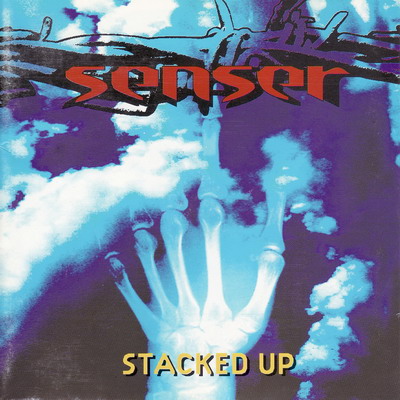
Minds were blown accordingly, but at this point Senser were certainly capable of picking up the gauntlet laid down by their support band. This gig happened on the 11th of May, which would have been three days after their debut album Stacked Up entered the charts at No.4 - an almost unthinkable achievement back in the days when they were known primarily as the Ozrics' favourite support band. Clearly, they'd crossed over, and on their own terms too. This show felt triumphant, and came with the added bonus of Nosaj joining them onstage for a rendition of the Beastie Boys' Looking Down The Barrel Of A Gun. Here's them doing it (without Nosaj) on the telly. I think you get a good sense of how short singer Heitham is from this footage...
So that was it for my First Year at university - but hang about,. I also played in a band around this time! Looks like you'll just have to come back next time to hear about my several months in a 33.3% Christian folk/indie/funk/pop collective which was named after a book about fishing...
Regular readers with a keen eye for detail will note that up to Autumn 1993 I didn't go to that many gigs - I probably listed more in my end of 2010 round-up than I attended in the first three years of the Nineties. This is fairly understandable given that for most of my teens I spent two thirds of the year at boarding school in Dorset, and the other third in a village in Somerset, neither of which exactly threw up regular opportunities for the thrill of live rock music.
However, things were to change when I moved to Southampton to go to uni. At this point, given enough money and stamina, it would be quite possible to go to see bands every night of the week, although you'd probably have to be prepared to see the likes of Mother's Ruin (rock metal, according to contemporary listings) or Necropolis (indie rockers, no less), neither of whom let a little thing like sharing a name with a multitude of other bands the length and breadth of the country get in the way of gigging Hampshire silly.
Initially, though, I rarely made it as far as town. Both my halls of residence and the main campus were situated in the Highfield area, a bus ride or long walk away from the city centre, and consequently a lot of social activity centred on the university bar. It was here, then, that I went to my first show as a student.
It's pretty much mandatory that any discussion of Chumbawamba is prefaced by a reference to their faintly ridiculous spell as pop stars on the back of their much-despised hit Tubthumping. This gig was clearly a few years prior to them getting knocked down and then getting up again, but they'd already had a pretty strange journey. In their very early days they were acolytes of anarcho-punk figureheads Crass, and the ideals of that band formed the backdrop for much of what they went on to create (though clearly not their mildly embarassing decision to sign to EMI). Musically, however, they swiftly diversified, incorporating more post-punk influences as well as folk and pop; in tandem with this, they used sarcastic humour to parody the political and pop culture of their time. I first heard them when somebody copied me half of their Slap! album, the point where they began to move into the dancier sound which would ultimately lead to Tubthumping. In 1992, their sample-heavy album Shhh earnt plenty of John Peel play and therefore my attention, and the following year they released a collaboration with Credit To The Nation called Enough Is Enough. Though its catchiness would be eclipsed by Tubthumping a few years later, I nevertheless reckoned that this anti-Nazi anthem was sure to be a hit. In fact, it made it to the giddy heights of #56. Oh well - at least John Peel's listeners voted it No.1 in the Festive 50 that year.
The two bands went on a joint tour following the single's release, calling in on Southampton students on October 16th. Opening band The Sea were a reasonable crusty folk band in the Levellers style, and Credit were on their usual form, but Chumbawamba's live show was a spectacle quite unlike anything I'd previously encountered. With elements of cabaret, pantomime and music hall at play, the band found new ways to make their many points, with Alice Nutter and Danbert Nobacon (the latter still a few years away from emptying an ice bucket on John Prescott at the Brits) the ringleaders and principal agents provocateurs, whether decrying homophobia or pretending to crucify Cliff Richard for charity. On the strength of this show, they became my favourite band for a while; I even headed up to see them in Brixton at The Fridge on December 5th with my new girlfriend Sophie, where the great supporting bill included indie band Sidi Bou Said and prominent Brit rappers Gunshot.
But let's not get ahead of ourselves... back at the start of term, my second Southampton show, on October 28th, also required only a short walk to the University. Since I'd seen them a couple of years earlier, Curve had released two full-lengths, and I was therefore much more familiar with their stuff and enjoyed their set way more than the Exeter show. However, it was their support band who left the more significant impression on me that night. Swervedriver had been lumped in with the shoegazing scene, largely on account of their Thames Valley origins and a love of effects pedals (and the fact that they supported bands like Curve didn't exactly put people off this false scent, clearly). However, their psychedelic fuzz-rock was a very different beast, its car-fetishizing aesthetics (key song title: Son Of Mustang Ford) locked in on the romance of the desert highway. Closer spiritually to Motorhead than Slowdive, they were enough of a rock band to have been invited on tour with Soundgarden and Monster Magnet in the US, although I recall that particular jaunt ended badly after Swervedriver frontman Adam Franklin publicly denounced a member of the headliners' camp for some casually homophobic remarks. Anyway, while they lacked the glamour and precision of Curve, their music ultimately had more depth, and I've noticed over the years that they've become quite the cult favourite amongst those in the know. I'd definitely recommend that people check out their album Raise and the single Never Lose That Feeling.
While applying for universities, it had occurred to me that a few years of reading the music press from cover to cover meant that the name of any major town in the UK immediately made the name of its pre-eminent music venue jump into my head. You say Hastings, I say The Crypt. You say Dudley, I say JBs. You say Newport, I say TJs. You get the picture. Well, clearly, if you said Southampton, I wouldn't have said The University. Nope, the venue I really wanted to get to was The Joiners. The only snag is that it was in an area, St Mary's, which those with local knowledge were keen to flag up as a little dodgy. I was also aware that I couldn't yet find my way around Southampton too well; after leaving alternative club Marshall's on my own, it had taken me an hour and a half and a couple of wrong turnings to get back to my halls, which I later understood should have been a 40 minute walk, tops.
Essentially, then, I was waiting for someone to want to come to a show with me, and was pretty gutted when I found out that a new friend of mine, Jason, had been down once already, to see industrial/noise band Oil Seed Rape. However, my luck changed when Sophie agreed to venture with me into the lawless environment of St Mary's Street to check out Northern Irish band Compulsion on November 8th. Aside from the Bob and Gutless shows I'd been to in Somerset, my gig experiences thus far were restricted to university refectory/theatre-sized venues, so it felt exciting to be in a place the size of the Joiners, a feeling which was only enhanced when I realized that the dudes playing pool in the front bar, one with bright red hair and the other with his long hair in schoolgirl-like plaits, were actually guitarist Garrett Lee and drummer Jan-Willem Alkema. My research suggests that local ska/punk band Smog UK supported, but I'm pretty sure I didn't see them until much later. Compulsion were great, though. The press had lumped them in with the terribly-named New Wave Of New Wave movement, but in reality they were closer to a blend of grunge and pop-punk, with a particular debt owed to the Pixies, and as such were a fine band to welcome me to the Joiners, and I always thought it was a shame that they never really got their due. That said, I doubt Garrett Lee has too many regrets with the way his career turned out, given that he's now producing stadium-indie bands like Snow Patrol...
There was one more show to go to at the Uni in that first term, namely Teenage Fanclub. These amiable Scots had sort of shuffled their way into the indie big leagues, largely through the charms of their 1991 album Bandwagonesque. By this point, its follow-up Thirteen was out, and while it couldn't compete with the hit rate of its predecessor, it still had some zippy tunes like single Radio. Having seen them at Glastonbury that year, I knew they'd deliver an entertaining set, and the only disappointment I can remember from that night was when some nitwit called for support act Juliana Hatfield to "get her tits out". If I ever turn into one of those people who bangs on about how gigs used to be better back in the day, just remind me of that.
I've divided these into the Top 10 I submitted to Kerrang! for their Writers Poll and a non-K! 10. The rules are that you can only vote for albums which have been reviewed in Kerrang!, so some of the latter list are noisy buggers which slipped through the K! net...
KERRANG! TOP 10
Swans, My Father Will Guide Me Up A Rope To The Sky
Electric Wizard, Black Masses
Grinderman, Grinderman 2
Ramesses, Take The Curse
The Dillinger Escape Plan, Option Paralysis
Deftones, Diamond Eyes
High On Fire, Snakes For The Divine
Trash Talk, Eyes & Knives
Kvelertak, Kvelertak
Cancer Bats, Bears, Mayors, Scraps & Bones
NON-KERRANG! TOP 10
The Fall, Your Future, Our Clutter
No Age, Everything In Between
Foals, Total Life Forever
Crystal Castles, II
Nails, Unsilent Death
Flying Lotus, Cosmogramma
Teeth Of The Sea, Your Mercury
Gorillaz, Plastic Beach
Kano, Method To The Maadness
Arabrot, Brotherseed
SONGS OF THE YEAR
I have to admit it, I've been listening to a lot of music this year which some might brand, well, cheesy. Hell, I'd describe some of the below as cheesy, but for whatever reason they've all made me happy...
The Dillinger Escape Plan, Farewell, Mona Lisa
Foals, Spanish Sahara
Magnetic Man, I Need Air
Doctor P, Sweet Shop
Danny Byrd/Liquid, Sweet Harmony
Darwin Deez, Radar Detector
Donae'O, Riot Music
Rolo Tomassi, Kasia
Gorillaz, Stylo
Everything,Everything, My KZ, Yr BF
GIGS OF THE YEAR
It feels like I went to fewer gigs than usual this year, partly because Gorse were more active, partly because I didn't go to any festivals, partly because I didn't make it to enough DIY punk shows. Nevertheless, there were some right old nights out in 2010, I can tell you. Here they are in alphabetical order, RIP some of the venues listed...
Art Of Burning Water/Jovian/At A Crawl @ The Cowley Club
Beirut @ Eastbourne Winter Gardens
Comanechi/Divorce/Fat Bicth @ The Hydrant
Converge/Kylesa/Kvelertak @ The Concorde 2
Crippled Black Phoenix/Blackstorm @ The Free Butt
Dethscalator/You're Smiling Now...But We'll All Turn Into Demons/Gum Takes Tooth @ Hector's House
The Dillinger Escape Plan/Rolo Tomassi/The Ocean in Brighton and London
Electric Wizard/Moss @ The Electric Ballroom
Facel Vega/The Sceptres/Regimes @ The Cowley Club
Family Man/Bloddrunk @ The Cowley Club
Sage Francis @ Audio
Grand Magus @ The Forum
The Guillotines @ The Hydrant
Ihsahn/Shining @ The Electric Ballroom
Jovian, plenty of times in Brighton
Les Savy Fav @ The Komedia
Melt Banana/Drum Eyes @ Jam
Mudhoney @ The Concorde 2
No Age/Male Bonding @: Audio
Part Chimp/Lamp/Jovian @ Hector's House
Pulled Apart By Horses/Gay For Johnny Depp @ Audio
Resurrectionists/Battle Of Wolf 359/Attack! Vipers!/Plague Sermon @ The Hobgoblin
Rolo Tomassi/Trash Talk/Throats @ The Engine Room
Shearwater @ The Free Butt & Audio
Spectrum/Medicine & Duty @ The Free Butt
Swans @ The Concorde 2
Torche/Jovian/Dopefight @ The Prince Albert
Unkind/Gascoigne/Brutal Regime @ The Cowley Club
White Hills/Pontiak @ The Engine Room
Wolves In The Throne Room @ The Hobgoblin
It's hard to fathom now, but in the year before Definitely Maybe and Parklife were released, the pages of the music press were full of pictures of dreadlocked ladies and gentlemen wearing combat trousers and ratty jumpers. It's a moment in the history of '90s music which tends to get airbrushed from most overviews of the decade, which usually reduce ten years of alternative scenes to the familiar framework of grunge, britpop and nu-metal. So what the jiggins was going on?
Crusties, travellers, call them what you will, but clearly a bunch of likeminded folk had been dropping out of the mainstream to meander around the country and attend Glastonbury, Stonehenge and many smaller events since at least the mid-1980s, some inspired by the lingering hippy dreams of the '60s, others by the alternative lifestyle choices promoted by Crass and their anarcho-punk brothers and sisters. I'd argue that things stepped up once acid house started morphing into rave at the decade's end. At this point, the natural home of house and techno wasn't in a superclub, and Ibiza hadn't yet become the holiday destination of choice for half the country's ravers (the Club 18-30 hols satirized by Blur in Girls & Boys were the norm for many kids back then). Demonized by the tabloids on account of acid's none-too-subtle exhortations to chemical indulgence, rave went underground, with clandestine parties set up out in the countryside and communicated to potential attendees through secret channels. With plenty in common, not least self-sufficiency and a disdain for the moral hypocrisy of Tory Britain, the rave and crusty free festival scenes met in woods somewhere in the English countryside, and got on famously. Things weren't to remain on the down low for long, however...
In May 1992, techno collective Spiral Tribe organized a rave at Castlemorton in Worcestershire. The scale of the event, with tens of thousands in attendance, the fact that it literally went on for days and its proximity to the village of Castlemorton itself made the rave a lead item on TV news bulletins, perhaps the first time a musical event had achieved this since Live Aid - although, needless to say, this coverage was a little less positive, Ironically, the more the media frothed at its collective spout, the more publicity the seemingly endless rave received, and the more carloads of ravers descended on the site. Things were PRETTY CRAZY, as you can see here...
At the time, it seemed like the ravers had well and truly won; Castlemorton went on for nearly a week with no major police interference, but the forces of law and order were merely biding their time. A bunch of Spiral Tribe members were arrested immediately after the event and dragged through the courts, while part of the collective were effectively exiled to mainland Europe. More seriously for everyone, Castlemorton directly inspired a section of 1994's Criminal Justice Act which was pretty expicitly intended as a crackdown on the outdoor rave scene. Along with increased stop and search powers, the police were now able to turn people away from areas where a rave was suspected to be planned - and a gathering of a mere ten people was all the coppers needed to declare that a rave was about to take place. Resistance to the Act ranged from the sublime (Autechre wrote a track with totally random drum programming to take the piss out of the Act's definition of dance music as featuring "repetitive beats") to the ridiculous (seriously, have you seen the artwork on the inside of The Prodigy's Music For The Jilted Generation?).
When the then-bill was first drafted, this counter-backlash inevitably earnt the entire crusty scene a certain outlaw status, which meant in turn that it received plenty of attention in the now-sympathetic music press. By Autumn 1993, when I went to Uni, the word 'Crusty' was appearing on flyers for alternative club nights alongside the usual metal/indie/goth/punk/industrial signifiers. But what exactly was 'Crusty' music?
In truth, it ranged from the hippy prog instrumentals of Ozric Tentacles to Senser's rap/techno/metal fusion - and the fact that the scene was based on common ethos rather than musical similarities was underlined by the fact that the former band, who had a huge profile in underground circles, were enthusiastic patrons of the latter. Folk-aligned bands like The Oyster Band and The Sea followed The Levellers into the public eye, while outfits like Zion Train, Dreadzone and Revolutionary Dub Warriors favoured a souped-up-form of dub. Techno was more than adequately represented by clubs like Megadog and acts like Banco De Gaia and Ozrics offshoot Eat Static, while its influence was cross-pollinised with various strands of world music to create the international rave sounds of Transglobal Underground, Loop Guru and Astralasia; Orbital, while hardly crusties, were also a key influence on the techno end of the scene, while also making head torches a fashionable accessory. Hawkwind, Gong and The Magic Mushroom Band functioned as godfathers of the scene, inviting many of these bands to play at their shows, while plenty of punks found a common ideology with the free festival scene, meaning that the likes of Citizen Fish, Blaggers ITA and anarcho-popsters Chumbawamba were all sharing bills with crusty bands, while labels like Words Of Warning encouraged dialogue between the two scenes.
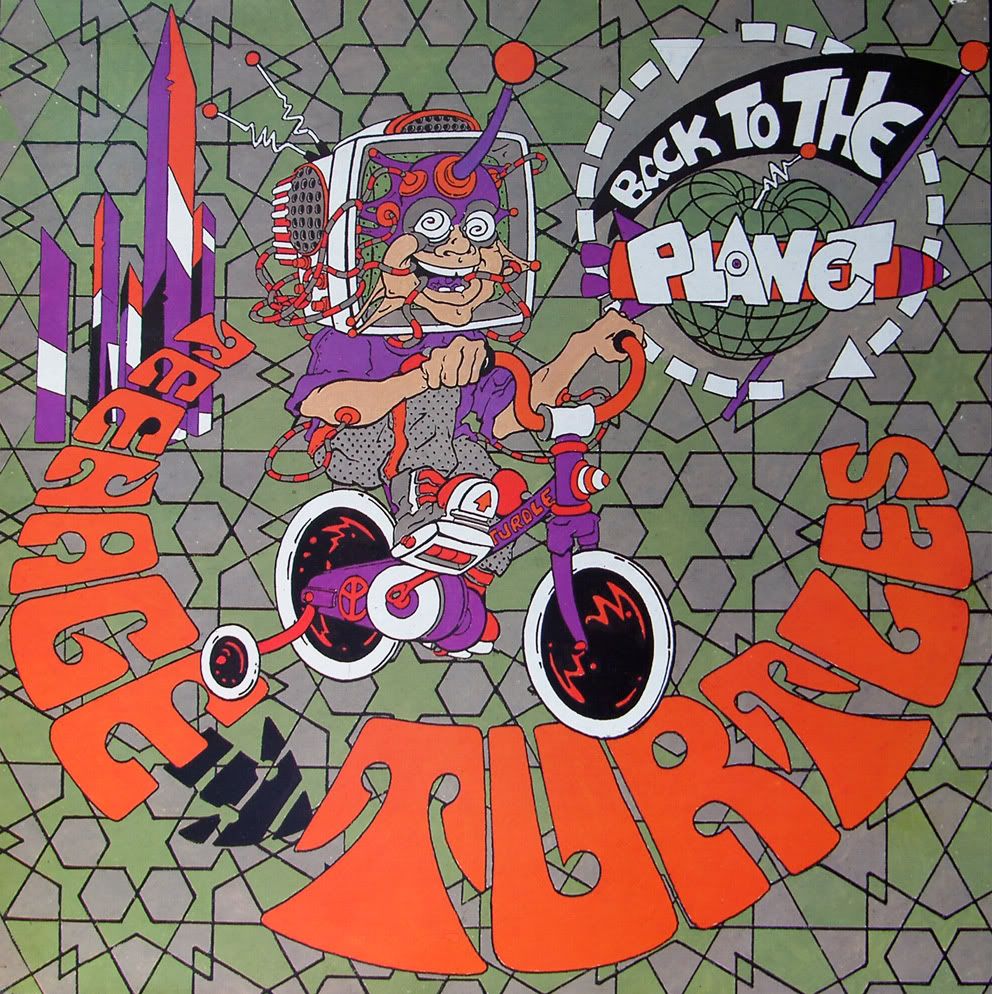
Perhaps the ultimate crusty band, for better or worse, were Back To The Planet. Their mixture of punk, dub, indie and dance was pretty ill-served by pisspoor commercial production on their first official album, Mind And Soul Collaborators, a release which is now all but disowned by the band. That said, production wasn't to blame for the genuinely awful lead single Teenage Turtles, a tune which took a surpisingly Daily Mail-style lyrical slant by literally blaming the problems faced by the nation's youth on, er, well...the cartoon Teenage Mutant Ninja Turtles.
At the time, however, this single was sufficient to lure Kieron Maguire, Bens Moores and Rowlett and myself to see Back To The Planet at Portsmouth's South Parade Pier at some unrecorded point in 1993. They were much more impressive live than on record, a fact that was underlined both by Kieron and at least one Ben mounting a stage invasion (almost certainly to that ruddy Turtles song) and by the live tape I bought after the show.
It seems quite appropriate that in the year of crusty's ascendance, I went to my first festival. That Back To The Planet crew was expanded to include Andy Bell and Kieron's brother, who was young enough (13 or something, I guess) to get into the festival for free. It's hard to write about Glastonbury without lapsing into cliche, but the point where you get to the brow of the hill and get your first view of the festival site is something everyone should experience at some point. The sight of a town-sized festival nestling in a Somerset valley, like a cross between a giant carnival and a Middle Ages battle encampment, is quite unlike anything else. And for a sheltered eighteen year old like myself, wandering around this huge site surrounded by like-minded folk and all the signifiers of an array of alternative lifestyles felt like returning to a home I'd never visited before.
As it was right in the middle of our A Levels, we didn't get there until Friday evening and at least two of us had to leave on Sunday night, but those 48 hours were still full of delights, both predictable and unexpected, and the occasional disappointment. Falling squarely into the latter camp were sets by The Velvet Underground and The Kinks. The idea of seeing these legendary outfits was sadly better than the reality, with Lou Reed sabotaging some of the best VU tunes by singing them in an inappropriately jaunty manner and The Kinks still stuck in their 80s soft rock phase. More reliable fun came from Belly and Teenage Fanclub, the latter band ending their set by kicking a load of footballs into the crowd with the assistance of John Peel. The set I came away enjoying the most was, believe it or not, the Stereo MCs, whose good times hip hop just worked perfectly in front of an up-for-it festival crowd. More baffling were The Orb; I went to watch them on my own and found myself in the middle of a field of people staring at a stage featuring a giant rotating sun and plenty of lights but very little visible human activity. I don't recall any dancing where I was stood, just a bunch of people drinking cans and smoking. It felt a little like being at the site of an alien spaceship landing. Obviously, the Ozrics also played. At the time they'd recently released the album Jurassic Shift, and from the point when they introduced one song as being about a dinosaur, Ben Moores repeatedly hollered requests for a cover of the Was (Not Was) tune Walk The Dinosaur.
Perhaps the funniest part of the festival occurred on the Saturday night, when Kieron's younger brother was the last man back to our tents. Left to wander the site on his own, he'd evidently had a great time and had way more stamina than us elderly 18-year olds.
A band so un-crusty they once suggested onstage at Glastonbury that somebody should build a bypass over the place, Manic Street Preachers should have no place in this blog, but the fact is that Simon Hildesley and I went to see them in July 1993. I'd first becone aware of The Manics when they appeared on the front cover of Sounds, probably in 1991 or so, when they looked and sounded like this:
That first Sounds interview kind of left me cold. Their sloganeering just seemed empty and I couldn't relate to their posturing. Anyway, I was more interested in the fact that I won a competition in that issue, bagging myself a selection of five horror videos (Evil Dead, Evil Dead 2, Basket Case, Brain Damage and Creepers). At this point, Sounds would give their competition results a little headline, so if somebody called Dave Roberts won some Del Amitri swag, it would be announced with the line "Dave Roberts is a Del Amitri fan." My taste of fame was communicated with the legend "Olly Thomas Is No Chicken", which became a minor catchphrase around the school. Some people would occasionally make chicken noises at me, indicating that they hadn't fully comprehended the meaning of the original statement.
But I digress... when I actually heard the Manics, I liked the fact that they were unashamedly influenced by cock rock and punk, and learnt to appreciate their attitude as something rather lacking in most of their indie contemporaries. By the time of their second album Gold Against The Soul, their sound had become somewhat slicker, but I shouldn't really have been surprised that they were still a rather rough and ready live band when we saw them at Portsmouth Guildhall. The support bands were trumpet-toting punkers Blaggers ITA and up-and-coming British rappers Credit To The Nation, and at the time we were probably more impressed with the latter than the slightly underwhelming Manics, even with Nicky Wire in his dress and headscarf-wearing pomp.
That summer, I took a job as an extra in a film called 'The Browning Version', which was being filmed in a couple of public schools in Dorset, a job which also employed a range of past and future friends including Finlay Stewart and James Tollow. The money I earnt helped fund my share in a fantastic holiday in Cornwall with Ben Moores, Simon Hildesley and his girlfriend Natalie Collinson, and my already-ex girlfriend Lucy Howard, a holiday worth mentioning in this blog if only for the memory of Ben Moores dancing to a tape of Astralasia's Sul-E Stomp on the beach. Shortly afterwards, the same crew went to the Reading festival for a day (which was pretty much all we could afford after Cornwall). http://www.readingfestival.com/history/index.aspx?id=2568
The first band I remember seeing after we arrived was the Senseless Things, playing on the main stage. Ben and I wasted no time in making our way into the crowd. It's pretty hard to make out in this grainy video, but there is documentary evidence of us flailing about at the 2:02 mark... (N.B. This video is tagged as being 1994, when the Senseless Things also played, but I'm convinced that this is from the '93 set, not least because my hair would have been a sight longer in '94...)
Over on the smaller stage (this being the era when Reading had but two stages, along with a comedy tent), we enjoyed the double whammy of Credit To The Nation and Senser. The former were enjoying plenty of attention on the back of their single Call It What You Want, which prominently featured a sample of Nirvana's Smells Like Teen Spirit. As the opening bars were identical, this would cause widespread confusion on indie dancefloors for a few years, with a tangible disappointment in the air whenever Credit's rinky-dink bassline kicked in - as it inevitably did, given that for a while there most clubs had unofficially banned Smells Like Teen Spirit, what with feverish youth attempting to outdo the tune's mosharama video. Anyway... Credit To The Nation was essentially MC Fusion, a black teenager from the Midlands. His youth provided both the good and bad things about Credit - it meant that he was fearless in (lyrically) attacking the BNP, police, sexist rappers, etc, but also that he did so with the skill of a Fifth Form debating society. Also, by explicitly seeking a crossover with both indie and pop, he alienated the British hip hop community, who at this point were more into harder (and superior) outfits like Gunshot or Katch 22. For all that, we enjoyed Credit's set, though it's telling that the comment that sticks in my head is Natalie saying that she'd picked up some new moves by watching Credit's dancers.
Although also fronted by a rapper, Senser were very much a different kettle of fish. Not only were they an actual band, but they featured a metal guitarist, hippy female co-vocalist, influences from the crusty end of techno... and a bloke called Haggis. Unlike Credit, their best tunes still hold up today, and it isn't an exaggeration to suggest that they were the closest the UK got to producing a Rage Against The Machine - as well as their fusions of sound, both bands gave voice to paranoid agit-prop, and tunes like Eject and Age Of Panic shared the dancefloor-destroying rush of Rage's hits. At Reading '93, their fiery rap/techno/metal inspired kids to climb the tent poles and dive into the crowd from a great height, forcing rapper Heitham to stop the set as violence flared.
Obviously, the Ozrics also played. Where Glastonbury was their heartland, a billing on the main stage at Reading was a sign of how far they'd come, from releasing homemade cassette albums to music press covers and a No.11 chart placing for Jurassic Shift. While a large proportion of the crowd used the Ozrics set as a perfect opportunity to have a sit down in the August bank holiday sun, set-closer Kick Muck proved as much fun as ever.
After the Ozrics, Therapy? took to the main stage. Another band very much on the rise, they'd spent 1993 releasing a trilogy of classic EPs which gifted the world with the tunes Screamager, Turn and Opal Mantra. In the process, they'd begun the crossover into the mainstream which the following year's Troublegum album would complete. Their Reading set showed them balancing their more commercial material with noisy tuneage from their earlier days, like this one...
To be honest, I think we headed home after that. We weren't interested in The The and Siouxsie & The Banshees on the main stage, and I have a feeling Radiohead cancelled on the second stage, so rather than stick around for Blur, we decided to leg it. This may have been the occasion when Simon ran out of petrol a few miles outside Portsmouth, forcing us to hitch home (this being the days before widespread mobile usage, we couldn't phone his folks or anything...).
You might have thought that Reading would have been our last festival for the summer, but you'd be wrong... I'm not sure whether the Pilton Village Fete still happens, but back in the day Michael Eavis used to finish the summer with a little party on Pilton's playing fields to thank locals for their support of Glastonbury. Simon and I went in '93 and, obviously, the Ozrics played. (I think Senser did too, although that might have been the following year).
So, the summer of 1993 was done and I was off to uni any day... just time to go and see Yeovil band Gutless at local pub the Quicksilver Mail, though! I'd caught them supporting PJ Harvey in Southampton earlier in the year, and as local gigs in my Somerset stomping ground were few and far between I didn't want to miss this. Combining the slightly dour indie which populated the local scene with a more thrilling and noisy experimental edge reminiscent of Sonic Youth, I didn't really know what to make of them then - and with only a 7" single and zero internet presence now, I'm still none the wiser. I did, however, buy a t-shirt, only realizing after I'd bought it that it was emblazoned with the phrase "Townie Scum Must Die"...
And with that, I was off to mingle with the townie scum in Southampton...
Back in 1989, I was a fifteen-year old kid with no idea of what I was going to do with my life. The only careers that appealed to me were writing and playing in a band. (As it turned out, I've ended up doing both these things, although not at a level which would justify using the word "career"). With a view to the latter, I convinced my folks to shell out for some guitar lessons at school, as well as a nylon-stringed acoustic on which to learn.
The school's guitar teacher was a pretty cool broad called Sheila Stubbs. At this point, I was no good at gauging people's ages if they were older than, ooh, 20, but the pictures in my memory suggest she was in her late 40s. She was quite short, Irish and hipper than the rest of the school staff put together, despite the fact that her husband, who was one of the full-time music teachers, once got so incensed by an advertisement for the first Manic Street Preachers album (featuring a close-up of part of Richey Manic's naked tattooed body) that I expected steam to start coming out of his ears, Beano-style. Sheila rocked a vaguely gothy look, and certainly had enough of the dark side to her that she once invited Jehovah's Witnesses into her home and proceeded to freak them out by going on about how she was a highly experienced witch (when the cat entered the room, she apparently declared "And there's my familiar!"). She also agreed that, once we'd been through the songs in 'The Complete Rock & Pop Guitar Player' and done some blues, she'd procure a Heavy Metal book so we could learn some Metallica.
So the next stage in my journey to musical stardom was to get an electric guitar, which made it to the top of my next Christmas list. I chose a guitar with a black and red crackle/lightning finish, which I thought was the most metal design in Yeovil's guitar shop. This impression lasted until a Sixth Form girl described it as "tortoiseshell". This guitar was to last me for years, albeit in an ever-decaying state - in 2003, a band we were supporting asked to borrow a guitar when they broke a string mid-set, but when handed mine, the guitarist actually refused to use it as it was so knackered after years of abuse.
I don't remember whose idea it was to start a band - OK, it was almost certainly Dominic Fry's idea, as he made the lion's share of the decisions - but I certainly needed little encouragement. For a boarding school, our place of learning was surprisingly amenable to the idea of its inmates starting bands, with portacabins outside the music building available for rehearsals, and occasional "gigs" in the assembly hall or music building. Ambient techno outfit Spooky were alumni of the school (as were Derek Jarman and the guy who invented Connect 4, apparently), but by the time I got there the premier outfit were a metal band whose name is, I'm afraid, lost in the mists of time. I do remember that they advertised a live performance with a poster featuring the cover artwork for Megadeth's Peace Sells...But Who's Buying? album, albeit with their name inscribed on the sign old Vic Rattlehead is leaning on. I think they also put up some individual photos of the band members, including a shot of the drummer (who I believe was called Hamer-Hodges) sticking his tongue out while playing the drums - he was clearly a very metal gentleman indeed. I went to see them play their set in the main room of the music school (in a lunch break, I think?!), where they played a bunch of thrash covers and an instrumental called Music To Gargle At. I took it to be their own creation and quite admired the bold diversion away from Bay Area thrash that it represented, but later discovered that it was almost certainly a cover of an Ozric Tentacles tune. It probably says something, both about the early '90s music scene and about my school, that a band would consider back-to-back Metallica and Ozrics covers.
Mind you, my band's repertoire was to become a pretty broad thing. I should probably introduce the band first, though, right? We've already met Dominic Fry; I was in quite a few classes with him and, if I could be said to have been in any social clique at school (which I'm not sure I was), then it would have been one which included him. He played the bass and was the band's de facto leader. I was on guitar, obviously. On the drums was one Tom Horsfall, who was easily the most handsome member of the band and was therefore closer to the school's mainstream than the rest of us. On vocals was Ben Rowlett, an enigmatic fellow with a wonderfully dry sense of humour. At some point, Keiron Maguire joined on second guitar, though I think the arrangement was pretty much that he'd show up whenever he could be arsed. Keiron was probably the most free spirit in the whole school and gave the impression that his life moved in its own unique way, while the rest of the school or, indeed, the planet, was stuck in boring old linear time and space. The flipside of this was that there was sometimes something slightly unnerving about him, as if he was privy to some cosmic joke that nobody else could possibly understand. Kieron is still playing music, as you can hear here: http://www.myspace.com/kieronmaguire
We started with covers, including Flower by The Charlatans, Transmission, No Love Lost and She's Lost Control by Joy Division, U-Mass by The Pixies, Head On by The Jesus & Mary Chain and a version of Hole's Teenage Whore (yes, with Ben on vocals - and he did it justice, too). We also covered a song by an unsigned band from Petersfield or somewhere similar called The Lovelies. The tune was called Hippy Trippy and we'd heard it because one of the members of the band was the older brother of a kid at school. I think this kid once asked us not to play it any more as it might put people off his brother's band. Undeterred, we recorded our one and only music video for it, which involved us emerging from the music building's fire doors and miming badly to it. Influenced by a surreal, no-budget Pavement video I'd seen on 'The Chart Show', I wore a velvet jacket and put coat hangers on my guitar head. Before the song was even over, a teacher who lived opposite the building has emerged to bollock us for ruining his Sunday afternoon. If anybody reading this has a copy of the video, please upload it to YouTube.
You'll notice that up until now I've not mentioned the name of this band. The thing is, we kept changing it. I think we started as Middle-Class Grasp, which was probably supposed to be a political statement - you'd have to ask Dom - but was obviously rubbish (not to mention the fact that people kept thinking we were saying "Middle-Class Grass"). There is now a band called Middle Class Rut, which is just about acceptable, although they sometimes shorten it to MC Rut, which makes me think they should be hyping the crowd at a drum'n'bass night.
Anyway, our next moniker was Captain Swing, and this was definitely political, Captain Swing being the name used to sign threatening letters sent out to landowners during a period of anti-threshing machine riots in rural England in 1830. Yes, we were paying attention in History classes, and, no, none of the tunes we played were remotely political. Unfortunately, we realized that, unless you were in our history class, you'd assume that the "Swing" in our name referred to a jaunty musical quality, making this as bad a name as, say, Colonel Funk or Lieutenant Groove. Here's a link to show you which kind of band might name themselves Captain Swing... http://www.captainswing.pwp.blueyonder.co.uk/
Clearly tired of the soapbox, but not of eminently stupid names, our final incarnation was as Nine Inch Snails. We thought this was pretty fucking funny.
Along from our video shoot, we did manage to make some other public appearances. We played the school's annual gig in the immense assembly hall - still the biggest stage I've been on and likely to remain so, I fear - alongside Manifest, a band from the year below who specialized in covers of the big rock/metal bands of the day (G'n'F'n'R, Metallica, Black Crowes, that sort of thing), who were clearly much better at their instruments than us and took things a good deal more seriously too. There was a strange policy for the night whereby each band would play half their set, then let the other play half of theirs. (I think there might have been a headline band from outside the school, maybe Bournemouth shoegazers Flood, but that might have been a different year.) Anyway, in the gap between our two half sets, Ben was busted for smoking by one of the teachers. We were all seventeen or eighteen, but while Ben was legally allowed to smoke in the real world, such activity on school grounds was liable to get you detention or early morning litter duty or some such. When he returned, he inserted a stream of freestyle invective against said teacher into one of the tunes (I think it was either No Love Lost or Teenage Whore), in place of the actual lyrics. Amazingly, we didn't get immediately shut down; in fact, I'm guessing that nobody in authority was really paying close attention to what was going on - it's all noise, anyway.
The only other Nine Inch Snails show I can remember was a smaller scale affair towards the end of the Sixth Form. There was, barely credibly, an actual bar in the school grounds, probably to prevent kids from going out into the surrounding towns and villages to sample their wares with no teachers on hand to monitor their alcohol consumption. Obviously, loads of us went to pubs in the surrounding towns and villages, but the Sixth Form Bar had its advantages, principally the cheapest drinks I've ever paid for. There was a limit on how much we could drink - a mere one pint for the Lower Sixth, or two for the Upper Sixth. However, somebody had made the fatal flaw of allowing Upper Sixth Form boys to work the bar alongside an actual adult, so if it was your mate they simply wouldn't put a mark next to your name when serving you a pint, so long as the adult barman's back was turned.
The bar itself was a prefab building with two rooms, one with the actual bar and some seating and the other with some form of table-based sport entertainment and a stereo. It was in the latter that Nine Inch Snails made our last stand. By this point we'd actually started writing our own material; the tunes I can remember were Inertia (written by me, pretty shoegazey) and Cicada's River (written by Dom and quite PJ Harvey-influenced), though I think we had another two or three tunes. I remember feeling it was a shame that we were inevitably splitting up, what with us all off to different unis in the autumn, as we were actually starting to come together as a band rather than a bit of a lark. I'm pretty sure that most of the kids out that night stayed in the other room, though.
Well, that's a suitably downbeat place to leave things. Future blogs will deal with the rest of my musical output, starting with Southampton University's one and only Carp Fever...
1991 starts on a high. I'm not talking about my New Year celebrations, which I can't remember - unfortunately I don't mean this in a "God, I was so wasted" way, but because spending the night at home with my folks watching telly didn't generate any noteworthy memories. New Years would pick up from 1992/1993, when a bunch of us descended on Bournemouth town centre, but that's a story for another time, as it doesn't really involve music (although at one point I found myself round someone's house watching fractal patterns on a telly while some acid trance played in the background - RIP Benoît Mandelbrot, btw).
No, the reason I was properly chuffed at the start of 1991 can be traced back all the way to the last week of 1990, when Iron Maiden released 'Bring Your Daughter...To The Slaughter' as a single in their usual selection of fan-friendly/chart-influencing formats. Never mind that it was a below-par offering, originally a Bruce Dickinson solo jam from the soundtrack to Nightmare On Elm Street Part Who Cares before being re-recorded for the Maiden's first disappointing album 'No Prayer For The Dying'. And never mind that it contributed to the arsenal of cliches so beloved by metal's detractors, as illustrated in the mid-00s when I described my (metal) band The Gilamonsters to a friend's brother, to be met with the query "So, do you do all that slaughter your daughter stuff?" Nope, the most important thing is that in the first week of 1991, it becomes Maiden's first (and, to date, only) UK number one single, and to add to the thrill it does so by deposing Cliff Richard's execrable 'Saviour's Day', a record so smug it has the catalogue number XMAS90. It should, perhaps, be pointed out that, nearly two decades before pleased-with-themselves commentators pointed out that Joe McElderry and Rage Against The Machine were both effectively signed to the same label, Cliff and ver Maiden provide EMI with two number ones back-to-back.
Having returned from the New Model Army show in one piece, my folks prove more amenable to the idea of me going to shows. My dad agrees to drive me to Taunton to see Carter The Unstoppable Sex Machine in February (N.B. I might not have told him their full name). Unfortunately, a heavy snowfall makes the roads too treacherous, a turn of events to which I react by shutting myself in my bedroom and playing Metallica's 'The Call Of Ktulu' on my electric guitar over and over again. We'll return to Carter USM later on, but I'd like to point out that, to this day, my dad has never gone to a rock show with me.
Happier times come in May when I go to see Curve at Exeter University. I've only heard a couple of their tunes -at this point they'd only just released their second EP - but I've been on the look out for any shows a reasonable distance from my Somerset locale, and great things are being predicted for Curve in the music press. They've been tied into the emerging shoegaze scene alongside bands like Lush and Ride, partly due to their one-syllable name but also as a result of the influence of My Bloody Valentine, but their sound has a greater emphasis on electronics and is therefore more clinical and icy. I've always felt that Garbage owed a lot to Curve, albeit presenting their music in a more obviously radio-friendly format. The show is great, but possibly a bit much to take in with very little in the way of familiarity to latch on to and a dense, wall of noise quality to the sound. It's significant too, as the first time I go to a show on my own; I'll do this plenty more in the future in Southampton and Brighton, although often at the kind of shows where I know I'll run into familiar faces.
Confession time: at some point in 1991, I'm pretty sure I go to see Kitchens Of Distinction at Exeter Uni, but I can't remember a ruddy thing about it. This might be because my mum picks me up afterwards and I have to leave early. The word you're looking for is AWESOME.
Enough of this norman no-mates stuff. Either more kids at school are getting into music or our excursion to see New Model Army the previous year has reached such near-mythological status that the next outing to a show in Portsmouth sees our number swelled by the addition of Ben Moores (definitely this time - I've checked), Chris Hook, Matt Gerry (I think), Alex Trewby and Andrew Cumming, a young man who has been saddled with the nickname "Lumpy", a monicker as unfortunate as it is inappropriate - as far as I can recall, there was nothing remotely lumpy about him. I sincerely hope that his 35 year-old incarnation has long since said goodbye to this appelation, though I fear that his surname may have supplied ample opportunity for alternative piss-taking possibilities.
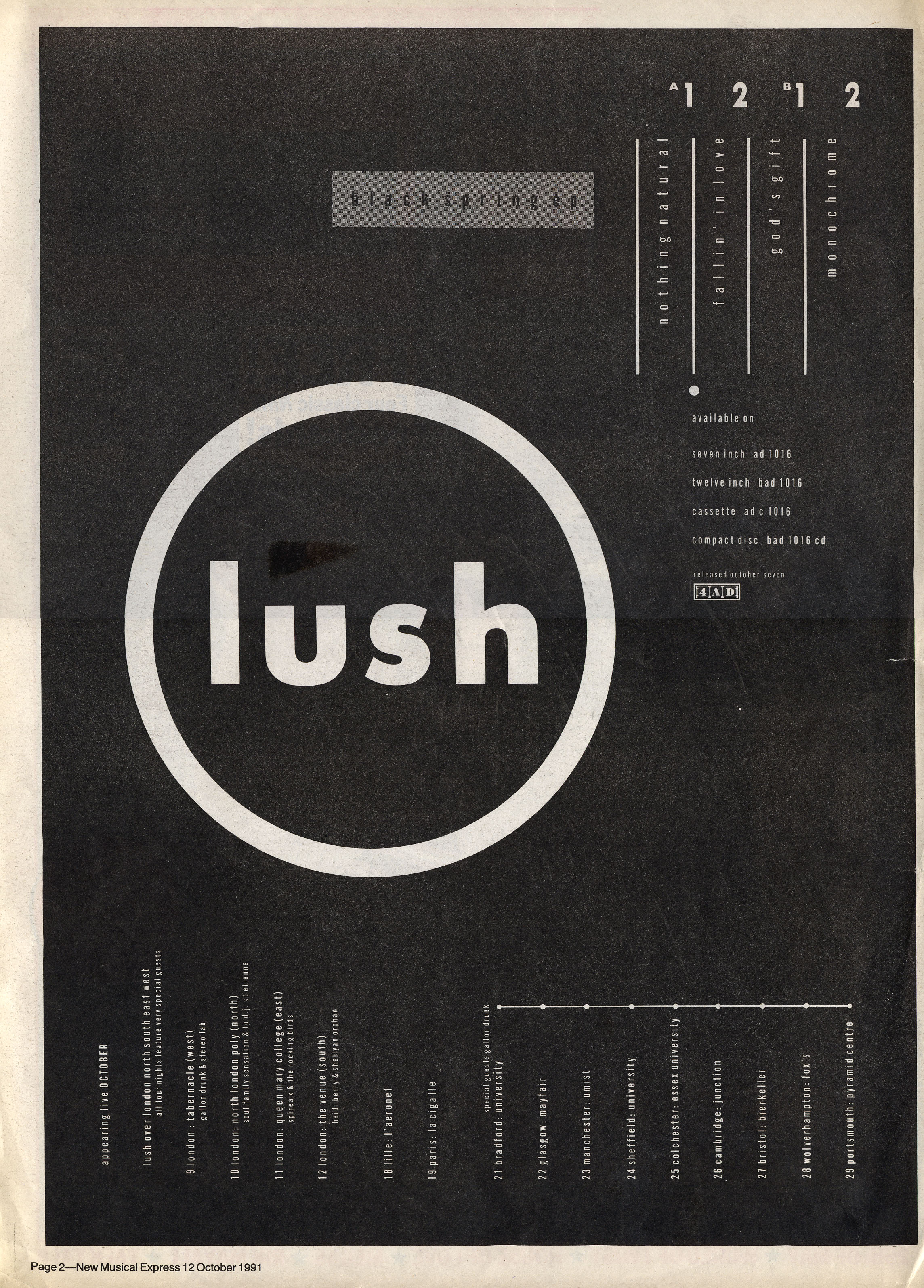
Now, while Lush are a far hipper name to drop than New Model Army, their appeal can't justify a place the size of Portsmouth Guildhall, and so on the 29th of October we are introduced to the chlorine-scented joys of leisure centre-cum-music venue the Pyramids Centre. It's a perfectly acceptable place to go and see a band, though it arguably doesn't quite live up to being named after one of the seven wonders of the world.
The first band of the evening are a pretty average indie band called Passing Clouds. Everyone sits on the floor to watch them which, even with my limited experience of rock concerts, I recognize must be a fairly dispiriting experience for the band onstage. I muse on this while remaining seated. Anyway, I need to conserve my energy and attention for the next band, London's Gallon Drunk. I've heard some of their tunes on John Peel's show (including a cover of Dick Dale's 'Miserlou', a good few years before the original was rediscovered thanks to its inclusion on the soundtrack to Pulp Fiction), and also seen footage of one of their gigs on Snub TV, a fantastic BBC2 series which remains one of the few examples of decent music television.
I think what fascinates me most about Gallon Drunk is that I can't immediately place their music into any defined scene. Even with my limited experience, I can tell that there's something pretty retro about them, both in their rockabilly basslines and their attire, all winklepickers, quiffs and suits, but there's also an element of unruly noise, largely emanating from frontman James Johnston, a man who's able to sing, play guitar and play organ all at the same time by tuning his axe to an open tuning and simply whacking it against his mic stand. (Note: with apologies to musos, this is about as technical a sentence as I'm ever gonna write.) I guess I've heard The Cramps by this point, who I can see are similarly influenced by rock'n'roll but in a much camper way, but it'll only be when I finally dig backwards to The Birthday Party that I see Gallon Drunk's real roots, a debt acknowledged a few years later when Johnston joins The Bad Seeds.
I watch Gallon Drunk's set wide-eyed; this is the most incendiary rock show I've yet seen, and will remain so for some time. It connects with me in a more primal way than anything I've seen so far, impressing upon me that you don't have to know a band's material to be physically and emotionally moved by some seriously righteous noise. When they've done, I rush to the merchandise stand and buy a Gallon Drunk t-shirt, which on closer inspection turns out to feature an image of a naked woman removing the head from a hawaiian-shirted man. I then proceed to find the rest of my friends sitting behind a pillar with their backs to the stage. They unanimously declare Gallon Drunk to be the very worst band they've ever heard.
Soon after the gig, I will write to John Peel and ask him to play a Gallon Drunk tune. Good egg that he is, he plays them and dedicates the song to me. The next day, Giles Warner approaches me at school to tell me he heard my name on the radio. "Yeah," he points out, "that song was shit."
Lush make a rather better impression on the rest of the group. Several years before their Britpop-era hits like 'Single Girl' and 'Ladykillers', their 1991 sound is part way between their MBV-influenced peers like Ride and the more etheral sounds of Cocteau Twins, whose Robin Guthrie is their early producer. In their favour, particularly to a bunch of 15- and 16-year old boys, is co-frontperson Miki Berenyi, whose exotic background (part-Japanese, part-Hungarian, it says on Wikipedia) and - look, I'm going to have to use the phrase "flame-haired" here, alright? - foxy, flame-haired image make her a cross-genre sex symbol. Around this time, it's not unusual to see members of Obituary or Napalm Death wearing Lush shirts, and I genuinely think this is less an attempt to show how musically open-minded they are and more a way of publicly declaring their love for Ms Berenyi.
Speaking to Ben more recently, he said that his experience of the Lush show was similar to mine with Curve in Exeter, but for the most part we come away from the Pyramids happy, bearing posters and t-shirts. Something which defined this period for me was waiting nearer the end of the year however...
The music historians amongst you will note that 1991 was the year of 'Nevermind', Metallica's black/self-titled album, 'Screamadelica', 'Blue Lines' and 'Loveless', and we certainly dug all those records.* It would, however, amount to revisionist history for me to brush under the carpet the fact that the key bands of 1991 for me and some of my friends, notably Simon and Ben, were Ned's Atomic Dustbin and Carter USM. We weren't alone in what may now be regarded as folly - NME gave the debut Neds album 'God Fodder' 8 out of 10 and described them as"The Beatles for the student bar generation", while a year later Carter would score a #1 album with the appropriately-titled '1992 - The Love Album'. However, by the time we actually became part of "the student bar generation", in 1993/1994, both bands had massively fallen from grace, their hooded tops hanging unloved at the back of thousands of late teens' and early 20-somethings' wardrobes. This encounter with the fickle nature of indie fame means I'm now rarely surprised to find, say, The Kaiser Chiefs or Franz Ferdinand struggling to maintain their initial impact past their second album.
I'm getting ahead of myself, of course. After the New Model Army gig in late 1990, I remember sitting in Simon's house reading a piece from Sounds to Andy which suggests that, while supporting The Wonderstuff on tour, the Neds have been blowing the headliners offstage on a nightly basis. "Well," replied Andy, "that's exactly the kind of thing Sounds would say." To this day, this remains the pithiest critique of music journalism I've ever heard.
In March 1991, the Neds achieve their first proper hit with 'Happy', a tune which I recently discovered still makes me, er, happy when it was played on 6Music. As a direct consequence, a man who goes only by the name Rat gets to go on Top Of The Pops.
The Neds aren't a million miles from their Stourbridge predecessors The Wonderstuff, but are somewhat bouncier, thanks both to some influences from the US alt-rock/hardcore scenes and the presence of two bass players. Their image is also more kid-friendly - with hindsight, it's probably a blessing in disguise that my school doesn't allow crimped hair, or coiffures which are short at the back and chin-length at the front, but I certainly decide that long shorts are the coolest way to (half) cover one's legs.
'God Fodder' follows shortly after 'Happy' and rapidly becomes an album to which we know every word. This proves useful when we get to see them in December at Portsmouth Guildhall. I think Irish band Power Of Dreams are the support, but they haven't lodged in my memory in the slightest - we're only there for one band. This is my first experience of a certain type of gig and audience, one where you spend the entire evening jumping up and down, pressed tightly into a pogoing mass of bodies, bellowing along to all the words for as long as your breath can manage it. It's an exhilarating evening, and one which again ends with the by now almost mandatory purchase of a t-shirt.
The Neds become the first band we go and see twice, nearly a year later in November 1992 at Poole Arts Centre. By this point, they're touring their second album 'Are You Normal?', which doesn't quite capture the country's imagination like its predecessor, but actually stands up rather better in the present day. This gig is notable for my being ejected from the venue due to what I maintain must have been a case of mistaken identity (no, it was nothing to do with my apparent resemblance to Mick Hucknall). Having watched countless crowdsurfers throughout both Neds gigs, I decide that I should have a go myself. Unfortunately, when I go over the barrier and begin the walk back round to the audience, a bouncer points at me, says "I've warned you before!" and hustles me out of the fire exit. I can only imagine that floppy/curly-haired 18-year olds in black band t-shirts are hard to tell apart for a member of the Poole Arts Centre bouncer massive. On another date on the same tour, a kid gets hospitalised when bouncers actually push him down a fire escape, so I guess I don't come off too badly - I even manage to regain entry to the venue, after missing a handful of songs, by waiting until a large group of people go into the auditorium at once and darting through while the door staff are overwhelmed. I've learnt my lesson though - to this day, I've never crowdsurfed again, unlike Matt Ross, whose Glastonbury 1995 crowdsurfing experiences will be detailed in a future blog...
On to Carter USM, then, a band who were fond of describing themselves as a cross between AC/DC and the Pet Shop Boys, the former due to their love of a raucous rock'n'roll riff and the latter because they used synthesised basslines and drums and, er, there were two of them. To be fair, this was a description which both over- and undersold them. On the one hand, they could never aspire to the timeless greatness of the 'DC or the majesty of early Pet Shop Boys (and if you dispute that last phrase, go listen to 'West End Girls', 'It's A Sin', 'Rent' or 'Left To My Own Devices' - winners all). But Carter did have a very individual charm, irrespective of any vague similarities to other outfits. Their music was charmingly ramshackle, while their verbose, pun-heavy lyrics dealt with socially-conscious subjects (bullying in the army, scummy landlords, domestic abuse, alcoholism) which were largely lacking in indie bands of the time. Their tendency to invite a portly gentleman called Jon Beast onstage immediately prior to their performance may, however, have helped prevent them from ever being taken seriously. If you're ever at a gig and people start chanting "You! Fat! Bastard!" at some unfortunate, it is largely Carter's fault
Their songs were also incredibly fun to jump around to, which is exactly what we find ourselves doing in May 1992 when we see them at Portsmouth Guildhall, a venue which is now becoming something of an old friend. The support band are The Frank & Walters, a band so whimiscal and twee that any one member of Belle & Sebastian could easily beat them up, but who we dig immensely at the time. The Carter experience is largely similar to the Neds show a few months earlier, albeit with more complicated lyrics to shout along to. An unfortunate memory of this show involves me grabbing a fanzine off someone outside without paying, which I excuse both to myself and to the writer when I belatedly posted him payment as a result of being handed various flyers and just assuming he was offering me more free gubbins. As the zine is an A4 publication which is thick enough to have writing on the spine, I suspect the real reason was simply that I'm drunk and cheeky. It was called Wake Up and was a cracking read, split between politics and politically-minded bands (including Carter). Hopefully sending him payment and then buying the next issue absolves me of my crime.
We go and see Carter again in December 1992 at the Bournemouth International Centre, as a result of my winning a competition on The Evening Session. At this point, and for a few more years, I will enter any competition going, a bit like an indie/metal equivalent of people who habitually enter competitions in Take A Break magazine. I will go on to claim such magnificent prizes as a Pendragon 12", the soft rock compilation 'Leather & Lace', and a Joyrider t-shirt and set of drumsticks. The t-shirt will eventually be thrown out, although not before a subsequent girlfriend tells me how much she hates it; the drumsticks may well still be on the windowsill of my room in my parents' house. However, unlike my Carter tickets, none of these prizes arrive with a fantastically cheesy signed picture of then Evening Session presenter Mark Goodier. The show is the biggest we've yet been to, and comes on the back of a great year for Carter. You'll note that for a whole year we've only been to see two bands, and that sums up what Neds and Carter mean to us at this point.
Actually, there is another show I go to around now which I find impossible to pin down to a particular date. A fairly under-achieving indie band called Bob play in Ilminster, the nearest town to where I live in Somerset, and I go along on my own. Fired up by my Neds/Carter experiences, I go down the front on my own and jump around to the first couple of songs before leaving because - you guessed it - my Dad came to pick me up. I can only imagine how the band must have felt when the only person who appeared to be enjoying them upped and left; no wonder the show isn't on the official gigography on their website.
Speaking of Somerset, in late 1991 I'm listening to John Peel when he announces that, among other delights, his show will feature "an exciting new voice from Yeovil". I'm not even sure I've heard him right, but it turns out he's talking about PJ Harvey, whose debut single 'Dress' he goes on to air. It's absolutely fantastic, and it's not any regional bias which makes me say now that hearing this record is a defining point in my musical growth. Like Gallon Drunk before her, PJ Harvey is clearly doing something outside the indie mainstream, but which immediately grabs my attention. I buy 'Dress' from Acorn Records in Yeovil, a fantastic record shop which is still there to this day, and in which I will later bump into PJ Harvey bassist Steve Vaughan. John Peel will go on to play tracks from the debut PJ Harvey album 'Dry', and the day after hearing some of these I bump into the lady herself in Yeovil. I'm afraid I almost certainly open the conversation with "Excuse me, but are you PJ Harvey?" I tell her that I've heard and enjoyed some of the tunes off the album, which is a cause of some concern as they apparently haven't even been mastered yet. She's enormously polite and, if anything, even shier than I am, and if she notices the fact that I'm carrying a copy of Metal Hammer with Joe Elliot on the cover and a free tape by It's Alive, then she's too polite to mention it.
I go on to buy 'Dry' in a Woolworths in Torquay, and then follow-up album 'Rid Of Me' - still one of my favourite records of all time - in Square Records in Wimborne. By May 1993, my friends and I are itching to get out of boarding school and have more fun elsewhere. I plump for university in Southampton, but some four months before I start there I go to my first gig in the city, when Ben Rowlett, Dom Fry, Kieron Maguire, (maybe) Andy Bell and myself go to see PJ Harvey at Southampton Guildhall (another city, another venue with the same name - seriously, though, never confuse Portsmouth and Southampton - people get angry). She/They (at this point, Polly is still insisting in interviews that PJ Harvey is a band name - she will back this up by replacing the other two members before the third album) are supported by another Yeovil outfit, Gutless, and our old friends Gallon Drunk, who go down better in this context than they had done with Lush 18 months earlier. This is the tour where Polly Jean dresses in a strange leopardskin coat/shades combo, but no wardrobe decisions can detract from the fact that she is absolutely brilliant tonight.
In later years, I will discover that several future friends from Southampton were at this very gig. All of which makes it seem like I'm leading on seamlessly into my Southampton years, but I'm not done with school days just yet. My next chapter will deal with the ever-changing names of my first band, and after that we've still got to deal with 1993: The Year Crusty Broke. Fun times are, clearly, ahead.
*...although not without reservations. I remember people being aghast at the bad job the Primals did of miming 'Loaded' on 'Top Of The Pops', perhaps because the tune was clearly the result of remixing and studio reconstructions rather than a live piece. Later, Simon asked a grov to pick him up a copy of Motley Crue's 'Primal Scream' on cassette single from Square Records in Wimborne, and was none too happy when they returned with the Primals' 'Don't Fight It, Feel It'. I seem to recall his exact words were "What's this Technotronic shit?" I'm confident that Simon would rather listen to Primal Scream than Motley Crue these days.