Wednesday, 29 February 2012

University Year Two, Spring and Summer Terms

I noted, early on, that blogging is by its nature a rather narcissistic pastime; the other side of the coin is that it's likely to come bundled up with self-doubt. I'm really not sure how much appetite you, dear reader, have for seemingly endless tales of me going to The Joiners Arms to watch now-forgotten indie bands do their thing in the mid-90s. My friend Emily Kearns has reassured me that people, particularly those who attended these or similar gigs at the time, will get a kick out of the nostalgia and jogged memories, while my narcissism is tickled by checking this blog's stats and seeing that just yesterday, some time since I last posted anything new, seven people apparently dropped by to read stuff.

So here's another blog about me going to The Joiners Arms to watch now-forgotten indie bands do their thing, in the first half of 1995.

In fact, appropriately given my previous post's punkery, my first show of '95 was another STE gig. Now, I'm aware that last time out I gushed almost to the point of inappropriateness about the general wonderfulness of the STE Collective, but I do feel the need to add something about the fantastically varied nature of their bills. I suspect this was common to the UK scene in general back then, but it was rare to go an STE show and see, say, three anarcho-crust bands, or three pop punk bands, or three emo bands; instead, they would habitually pull together a line-up from across the punk/hardcore spectrum, and so it was on January 14th 1995, when they put together three bands who were so dramatically different from each other that, I would later discover, one of them viewed another with outright derision.

The show was opened by local trio Smog (UK), who I guess you could describe as a ska/punk band... that is, if you understand that tag more in terms of Citizen Fish than, say, Less Than Jake, and recognise that the ska element was really just a flavoursome topping on a substantial punk rock base. As a three-piece, Smog's sound was necessarily stripped-down - no parping horn players here - and this, combined with songs about pollution, racism, etc, painted them as a serious outfit rather than the perpetual knees-up merchants which would define ska/punk by the decade's end. That's not to say that their shows weren't a bunch of fun, nor that they totally swerved the tradition of novelty cover versions which would routinely ruin rock club nights for all right-thinking people soon enough - Smog's speciality was a blast through George Michael's Careless Whisper, with the word "fuck" hilariously replacing the word "dance" in the line "I'm never gonna dance again..."


No such frivolities were likely with the next band, Nottingham's Bob Tilton, who I guess you could describe as an emo band... that is, if you understand that tag more in terms of Rites Of Spring than, say, My Chemical Romance. I suspect that griping over what the term "emo" has come to mean is the equivalent, for people of my age and musical tastes, of people my Dad's ages complaining about the modern application of the phrase "R&B", and I could easily spend the rest of this and, quite possibly, all future blogs doing nothing but defending emo in its heyday. None of which would have convinced Smog (UK), who later snorted at the very mention of Bob Tilton's name, such was the disparity between their street-level punk and the earnest intensity of the Notts mob.


As great as they sounded on record, as you can hear above, Bob Tilton were something else altogether live, where they crackled with an intensity I hadn't really encountered previously. They also revealed their strict adherence to DIY principles by refusing to talk to the NME, whose unusual interest in a band from the hardcore underground was a sign that something special was going on.


Another gear change happened with the last band of the night, Walsall's Skimmer, who I guess you could describe as a pop punk band... that is, if you understand the tag more in terms of Mega City Four than, say, Blink 182. Skimmer were part of a UK pop punk scene centred around the Crackle! label and characterised by heartfelt lyrics, speedy tunes and a slightly ramshackle sound somewhere between Ramones and Husker Du. I remember digging them quite a bit on that night, despite having just been blown away by Bob Tilton.

A few nights later, I was back at The Joiners to catch the equally strange pairing of Dub War and Motocaster. While punks can see connections in ideology when there are few in sound, more typical audiences tend to ignore a support band if they're too different to the headliners. (You could also argue that a show like Skimmer/Bob Tilton/Smog (UK) wasn't divided into headliner and support bands, for that matter). So it was that Motocaster, a garage rock/power pop band from the US, didn't exactly go down a storm when opening for a Welsh ragga punk band.


Mind you, at least one member of the audience was equally confused by Dub War; my fellow Wessex News scribe Christian Ott, a man principally interested in the crusty end of dance music, had accompanied me on the basis that he thought they'd sound like Revolutionary Dub Warriors. You can kind of see his thinking, but from the introductory cranking of frontman Benji Webbe's air raid siren, he was clearly in for a noisier evening than anticipated.


Dub War were shortly to release Pain, their first full-length album after a few vinyl releases on excellent Welsh punk label Words Of Warning had attracted the attention of the much larger Earache. At this point, the latter label was attempting to branch out from the grindcore/death metal roots which had made it legendary, and Dub War fitted into their vision of a more varied roster. At the time, I thought this a good idea, but with hindsight their scattershot approach to signing new acts marked a massive dip in quality control from which some would argue the label has never quite recovered.


Dub War themselves were great, however, although my review for Wessex News included the unfortunate comparison of frontman Benji Webbe to a "caveman on acid", leading to questions being raised by my mother. She didn't call me out on the horrible journo cliche of describing something as being "on acid", nor the entirely accidental racist overtone, but any drug references were a sore point ever since I'd returned home from my first term at Uni and casually mentioned that I'd smoked a bit of dope, thinking that as rational adults my folks might be able to differentiate between the occasional spliff and a descent into drug hell. Wrong!

Despite a fairly commercial second album in 1996's Wrong Side Of Beautiful (including the single Enemy Maker, which stalled at No.41, the unluckiest number in chart history), Dub War never quite got their due, but after transforming into Skindred and changing every member bar Benji, they've slowly become one of Britain's best-loved metal bands, albeit with a slightly less heavy and at times quite nu-metal sound. More on them a lot, lot later.
 

Come the first evening of February and, you might not be entirely surprised to hear, I was back at The Joiners, this time in the company of AC Acoustics and Cable. The latter band were a mere two singles old at this point, and I was pretty keen on the second of these, Seventy, which John Peel and Steve Lamacq had been playing.


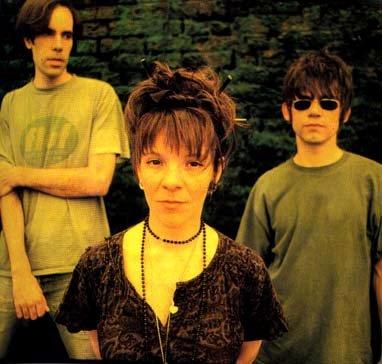
It was early days for Cable, and they'll pop up again before too long, so let's move on to AC Acoustics, another band with whom I was familiar thanks to Peely's patronage. I compared them at the time to Pavement and Sonic Youth, and they certainly had a more alternative, US noise-informed sound than the Teenage Fanclub/BMX Bandits-type stuff that seemed to dominate their native Glasgow in the early-mid '90s. Consequently, their tunes were less immediate than Cable's, but their set won me over to the point where I ended my review gushing about seeing exciting new bands at, yes, The Joiners...


AC Acoustics flirted with something approaching fame a few years later, when Brian Molko from Placebo took to namedropping them and wearing one of their shirts quite regularly. It probably helped that it featured the name of their then-single Stunt Girl, which was perfect for Molko's endless broadcasting of his androgyny. His involvement did little to guide AC Acoustics to fame, however, at least beyond encouraging a few dozen suggestible indie goth chicks to give them a listen.

A week or so later, my housemate Lucy went to the Joiners to see the up-and-coming Supergrass (with support from The Bluetones, making this quite the Britpop stars-in-waiting tour), but I didn't bother, waiting instead until the 22nd for my second encounter with Drugstore. Opening on this occasion were Velo-Deluxe, who featured John Strohm (ex-Blake Babies/Lemonheads), and who stand out in my memory mainly for the velocity of their set, each song crashing into the next.

Drugstore were definitely not about speed; their set started with Isabel onstage, accompanied only by her guitar, before Daron and Mike strolled on for Starcrossed. The Joiners was packed and I wrote at the time of the band's ability to create an atmosphere through their easy, relaxed rapport with the audience, and of course, their songs. Band of the year, I confidently stated.

My next appointment with The Joiners was on the 8th of March, in the company of Bury St Edmunds's finest power trio, Jacob's Mouse. With identical, hairy twins on guitar and vocals and a singing drummer, they were quite an awkward proposition, and they didn't really fit the "grunge" tag they'd been lumbered with, either. OK, they had a love of bug, dumb riffs which hinted at Bleach-era Nirvana, but their sound was peppered with twangy guitar lines, weird lurching rhythms and distant echoes of both dub and The Magic Band, which was probably why they ended up labelmates with Silverfish, Huggy Bear and Cornershop on the Wiiija label.


History records that I didn't go to another show for a couple of months, probably due to of a mixture of work deadlines and going back to Somerset for Easter. This dry patch was broken when Megadog returned to Southampton Uni on the 3rd of May, with the trance sounds of Children Of Dub and global techno of Banco De Gaia. And MC Teabag, of course.


The next day, it was back once again to The Joiners. 

It seems to me, with hindsight, that some of the bands mentioned above - AC Acoustics, Cable, Jacob's Mouse - belong to something of a lost generation of bands. Although generally reviewed positively in the music press and supported, of course, by John Peel, these bands were too awkward to attract any wider, lasting attention in an era dominated by Britpop. They also lacked enough in common to be viewed as a scene - though I'd bet that each one of them was compared to Fugazi at least once in print - so they haven't stayed in people's minds through association (how many people would remember Chapterhouse if it wasn't for their fully paid up membership of the shoegazing scene?). This next gig I went to was like a showcase for such doomed bands, with Pet Lamb supported by Elevate and Sonar Nation.

Bizarrely, local paper The Echo ran an interview with openers Sonar Nation ahead of the gig, indicating that they had at least one person writing for them who dug decent music. In said piece, they joked that their influences varied from the first Fugazi EP to the second Fugazi EP, while my album review for Wessex News compared them to The God Machine. Heavy stuff, basically. Incredibly, they're still going, and played a show in Canterbury last month.

Elevate fitted somewhere in the post-punk/post-hardcore spectrum, a British equivalent to bands like Slint or Rodan but with a bit more of a tendency to rock out. Beware internet searches, as there's some sort of religious Elevate Band doing the rounds these days - here's what the real ones sounded like...


To be honest, after those two, and possibly also a few beers, Dublin's Pet Lamb didn't quite grab me so much. With an endorsement from Therapy?, I was looking forward to them, but apart from the catchy Little Meaner, their set rather passed me by. I've still ended up with two of their albums in my collection over the years, though.

There's one more show to discuss from this particular academic year, but that's gonna wait till next time - hold on to your hats, people, it's gonna be an Avail special...

Thursday, 5 January 2012

2011 in the rear view mirror

The events of the last year have been pored over by broadsheet journalists and bloggers ad infinitum, so there's little need for me to add to the commentary. Suffice to say, though, that after riots and uprisings, killing sprees and dead dictators, natural disasters and private tragedies, it feels rather odd to talk about 2011 purely in terms of records, gigs, TV shows, films, etc...

But still, here we go.

MY  TOP 10 KERRANG! ALBUMS OF THE YEAR

  1. EARTH – ANGELS OF DARKNESS, DEMONS OF LIGHT 1
  2. WOLVES IN THE THRONE ROOM – CELESTIAL LINEAGE
  3. RETOX – UGLY ANIMALS
  4. THE ICARUS LINE - WILDLIFE
  5. BLOOD CEREMONY – LIVING WITH THE ANCIENTS
  6. RAMESSES – POSSESSED BY THE RISE OF MAGIK
  7. WORMROT – DIRGE
  8. CARLTON MELTON – COUNTRY WAYS
  9. WILL HAVEN – VOIR DIRE
  10. LETLIVE. – FAKE HISTORY

     MY TOP 10 NON-KERRANG! ALBUMS OF THE YEAR 
    (ineligible due to musical unsuitability or merely not getting reviewed in those pages...)
    1. FUJIYA & MIYAGI - VENTRILOQUIZZING
    2. PJ HARVEY - LET ENGLAND SHAKE
    3. THE JOY FORMIDABLE - THE BIG ROAR
    4. KING CREOSOTE/JON HOPKINS - DIAMOND MINE
    5. ZOMBY - DEDICATION
    6. NIGHT BIRDS - THE OTHER SIDE OF DARKNESS
    7. CAINA - HANDS THAT PLUCK
    8. SEA BASTARD - THE GREAT BARRIER RIFF
    9. PEGGY SUE - ACROBATS
    10. GHOST LIMB - INFRASTRUCTURE
    TOP 10 TUNES OF THE YEAR
    1. FUJIYA & MIYAGI - PILLS
    2. BIG DEAL - TALK
    3. DAM MANTLE - NOT A WORD
    4. I BREAK HORSES - WINTER BEATS
    5. ZOMBY -ALOTHEA
    6. WOLVES IN THE THRONE ROOM - WOODLAND CATHEDRAL
    7. DERADOORIAN - MARICHKA
    8. SPYCATCHER - REMEMBER WHERE YOU WERE WHEN MICHAEL JACKSON DIED
    9. KING CREOSOTE/JON HOPKINS - BATS IN THE ATTIC
    10. WILL HAVEN - WHEN THE WALLS CLOSE IN
    GIGS OF THE YEAR 
    (in alphabetical order)
    ANACONDAZ @ The Prince Albert, The Cowley Club and The Green Door Store
    BRING ME THE HORIZON @ Brixton Academy and Download 
    DEFEATER @ The Concorde
    ELECTRELANE @ The Komedia
    EVILE @ The Underworld, The Hydrant and Download 
    GHOST @ Download 
    GHOST LIMB/BLACK KITES/RESURRECTIONISTS @ The Prince Albert
    GINGER @ The Hydrant
    HELLBASTARD/PANZER BASTARD/SUICIDE WATCH/CONSTANT STATE OF TERROR/BLOD DRUNK @ The Cowley Club
    HYRO DA HERO @ The Concorde and Download
    THE KING BLUES @ The Concorde and Download 
    LA DISPUTE/TOUCHE AMORE/SOUL PATROL @ The Hydrant
    LETLIVE. @ Download
    LITURGY/CARLTON MELTON @ Hector's House
    LOS MENDOZAS @ The Hydrant 
    MARIACHI EL BRONX @ The Concorde
    MONARCH/PAGAN ALTAR/SEA BASTARD @ The Green Door Store
    NIGHT BIRDS @ Sticky Mike's Frog Bar
    PARTS & LABOR/TEETH OF THE SEA @ The Green Door Store
    PETTYBONE @ The Green Door Store
    THE PHANTOM BAND @ The Prince Albert
    PRIMAL SCREAM @ The Brighton Centre
    PYRAMIDO/CLOCKED OUT in Deptford
    RATZ ASS @ The Unicorn
    ROLO TOMASSI @ The Green Door Store 
    SAVIOURS @ The Prince Albert
    SLOATH @ Hector's House
    STATE ICONS @ Sticky Mike's Frog Bar and The Green Door Store
    TRASH TALK @ Download and The Concorde
    VENETIAN SNARES @ Coalition
    WILD EVEL & THE TRASH BONES/KING SALAMI & THE CUMBERLAND 3/THEE VICARS @ The Concorde


    THE 4 FILMS I SAW IN THE CINEMA IN 2011

    BLACK SWAN
    BRIDESMAIDS
    JANE EYRE
    THE HANGOVER PART 2


    TV SHOWS OF THE YEAR


    1. THE KILLING

    OK, it seems a bit cheaty to include a show first aired in 2007 and 2009, but it wasn't until this year that the two series of The Killing were made accessible to viewers in the UK. The first series was so gripping that when we went on holiday and discovered our house in Britanny could receive BBC channels, we actually stayed in to watch a Danish show with English subtitles  - in France. 

    Plenty of words have already been gushed about the first series, but it seems to me that the second series picked up a lot less praise. I'll try not to include any major spoilers here, but if you haven't seen it and want to ensure nothing is given away, maybe move on to the next bit...


    In some ways, the basic formula of The Killing doesn't change much for the second series. The mysterious killer, the tangled investigation which keeps on going down dead ends, the shady politics, the innocents caught up in it all. As when reading two consecutive novels in David Peace's Red Riding series, it's hard not to feel that while (most of) the characters have changed, this landscape is stuck in a constant loop of murder and corruption. Sarah Lund returns, of course, and the story is once again told through three main strands: as in the first series, these include the police investigation and the politicians implicated in it, but where previously the story followed the bereaved family of the victim, this time it focusses on a sectioned former soldier, his family and former colleagues. As before, each episode ends with a snapshot of where these strands are, the tense accompanying music somehow almost comforting in its familiarity.


    The first noticeable difference this time round is the pace: trimmed from twenty episodes to ten, this rattles on at quite a speed. There's a second killing relatively swiftly, and it soon emerges that Lund and her pals are chasing a rather active serial killer. The scale is much larger too: as hinted at above, the killings involve the army, while the politics are now at a national level. Race may have played a part in the first series, but European reaction to the War On Terror and Islamic fundamentalism is foregrounded in this investigation, and the trigger for the whole state of affairs appears to have been an incident involving Danish troops in Afghanistan.


    Somehow, this latter point occasionally makes The Killing II feel a little like an extended episode of Waking The Dead, which often tended to riff on a theme of the sins of the past having grim consequences upon the present, while the enigmatic, (mostly) unseen killer and his nasty methods recall the bad guy of Harper's Island, that underrated US exercise in teen-friendly Grand Guignol, particularly in a sequence on a Swedish island. While neither of those comparisons are intended as insults, though, The Killing still outstrips anything that came before it on every level: its acting and writing are exemplary, and it even manages to use hackneyed signifiers (police investigating darkened warehouses with torches, that kind of thing) without ever seeming cliched. There's evidence of some thawing in Lund's distant exterior, but she remains the socially awkward, damaged and driven detective who proved so enthralling first time round. A third series is apparently likely, and while I agree with actress Sofie Grabol's assertion that it should be the last, I'm already looking forward to it.

    Oh, and if you refuse to watch this series on the basis that it's subtitled, just fuck off. Or learn Danish. 


    2. THE SHADOW LINE

    With criminal business and conflicted coppers at its heart, this inevitably got commentators dubbing it the UK's answer to The Wire (see also: The Hour as the UK's Mad Men). It wasn't - it was much stranger than that, with a tendency towards the surreal and nightmarish. Amongst an excellent cast, Rafe Spall's manic, babyfaced thug stood out, with a Radio Times correspondent even suggesting that his story could be a prequel to Heath Ledger's Joker. Full disclosure: I haven't yet watched this series to the end, but what I have seen already puts it head and shoulders above anything else the UK produced this year.


    3. EDUCATING ESSEX

    OK, it was a terrible name, but it didn't miss the point as much as the people whose only reaction to this show was to slag off the "chav" kids it portrayed. I've no idea how they managed to convince staff and parents that it was a good idea to put 65 cameras into a Harlow secondary school for a year, but by doing so the programme makers fashioned a moving portait of teaching in the 21st Century. The kids weren't demonised, but emerged with both their hopes and their problems laid out, sometimes in heartbreaking fashion. The teaching staff, meanwhile, gave 2011 some of it most unlikely TV stars, not least Deputy Head Mr Drew (a pedantic rule-enforcer but probably brilliant teacher, first seen singing tunelessly along to Fairytale Of New York while eating cereal), while Head Teacher Mr Goddard proved particularly likeable; when he teared up a couple of times in the last episode, well, let's just say he wasn't the only one. These were teachers who genuinely cared, who were visibly upset when Vinni, who they'd spent years trying to encourage, dropped out in the term of his GCSEs. There was outcry amongst simpletons when one teacher, clearly jokingly and perhaps even affectionately, referred to his class as "scumbags". Appearing on BBC Breakfast, Mr Drew lamented that these children had a better understanding of irony than some adults.

    See also: 24 Hours in A&E, made by the same people, which preceded Educating Essex with more moving/hilarious recordings and genius editing, this time centred on Kings College Hospital in Lambeth.


    4. THE CRIMSON PETAL AND THE WHITE

    A rare adaptation, in that it totally captured the feel of the novel it was based on, this was a grimy, morally conflicted tale of prostitution and society in Victorian London. Like the evil twin of a more trad, Dickens-derived vision of the times, this boasted both all-star cast and brilliantly-conceived sets while ensuring the viewer never forgot that they'd been dropped into a dangerous, bewildering environment.


    5. DOCTOR WHO

    Splitting this series in two seemed a strange decision, but it effectively gave it two end-of series peaks (let's not give the first the clunky name of "mid-season finale", OK?), not to mention two rollicking openers (Let's Kill Hitler was a terrific introduction to the second half). As always, there were both clunkers (The Curse Of The Black Spot seemed like a belated attempt to shoehorn pirates into Doctor Who, while we didn't really need James Corden to pop up again in Closing Time - Daniel Mays fulfilled a similar role so much better in Night Terrors) and massive revelations (River Song's identity being the big one), but the standout episode was clearly The Girl Who Waited, which combined the sort of time-twisting plot device beloved of Moffat-era Doctor Who with a genuinely wide emotional range and great performance(s) from Karen Gillan. When she leaves, apparently next year and probably in, oh God, a "mid-season finale", this will be the episode we'll remember her for the most.


Wednesday, 19 October 2011

Punk Rock

Longterm readers of this blog - or, indeed, anyone with enough time on their hands to go back and read it from the beginning - may remember my tales of getting into music back in my schooldays. There was, however, one significant genre which evaded mention, perhaps because I got into it a little later, or because it was something of a private passion. Most of my friends were into indie, which, along with metal, hip hop and acid house, could be found in the charts and in several national magazines. In contrast, punk rock was perhaps at its most under the radar at the end of the 1980s. Sounds still gave it a little coverage, and John Peel could always be relied upon, but much of the media had written it off as a dead or dying irrelevance.

These days, when punk and metal feature in the same magazines and on the same rock dancefloors, when scenes like doom metal and crust overlap so much, when a bunch of my punk friends are genuinely excited about going to the very metal Live Evil festival this weekend, and when mainstream metal has co-opted so many of hardcore's signifiers, from the breakdown to the circle pit (though rarely the politics, sadly), it doesn't seem strange that I came to punk/HC through metal. But when the likes of Kerrang! first appeared, the two genres looked scornfully upon one another. Punks thought metal was pompous, fantasy bollocks, and the metal attitude towards punk can be summed up by this eloquent chap.


Thanks, chump. Things were starting to change by the time I started paying attention in '88. The crossover between thrash metal and US hardcore had spawned a subgenre, known as, er, crossover, and so the likes of CRO-MAGS and DRI were deemed suitable fare for Kerrang!. On this side of the pond, NAPALM DEATH had kicked up such a ruckus that the bands following in their slipstream were likely to at least be mentioned in dispatches in the metal press. But overall, their coverage of punk/HC largely consisted of METALLICA's refusal to be photographed without at least one member in a MISFITS t-shirt.


However, at some point round about '89, Metal Hammer gave a teenager called James Sherry a monthly column called (if memory serves) Rotten To The Core. In what was my introduction to the DIY ethos of the hardcore scene, James would enthuse about the tapes, records and fanzines he was into, complete with prices and contact addresses. As a teenager myself (just three-and-a-bit years younger than James, I realised recently), I had very little disposable income to devote to buying music, and the generally cheap prices of these punk artefacts, along with the fact that I'd heard some of the bands mentioned on John Peel's shows, led to my making a couple of purchases which would radically redraft my musical boundaries.

The first was a tape called Fur Is For Animals. It was a benefit compilation for the animal rights group Lynx, although as they were charging less than £2 for a 34-track tape I'm not sure how much they actually raised. The music on offer included melodic female-fronted punk (JOYCE MCKINNEY EXPERIENCE ), melodic Welsh-language punk (ANHREFN), anthemic political punk (RECTIFY), US hardcore-influenced bands (INSTIGATORS, COWBOY KILLERS), gothy post-punk (TWELVE 88 CARTEL), peace punk (UPHEAVAL), thrashcore (RIPCORD, SATANIC MALFUNCTIONS), thrash metal (WAR DANCE ), metal-influenced hardcore (DECADENCE WITHIN), crusty death/grind (PROPHECY OF DOOM), anarcho punk (ACTIVE MINDS, DESIGNER FEAR), some plain weirdness (GODORRHEA), a band featuring a certain James Sherry (SCUM CHILDREN) and even more besides.


As a result of listening to this tape, my understanding of the term "hardcore" was not the standard image of the music as punk rock's harder, faster offspring, but more an umbrella term which could cover an array of bands and styles, united more by ethos than sonic similarity. (In a sense, I considered punk almost a sub-genre of hardcore, rather than the other way round). I still see the hardcore scene as something which can encompass everything from riot grrrl to power violence, emo (in its pre-MTV sense, at least) to d-beat, post-rock to metal, just so long as the people involved operate with integrity and a DIY ideology. (For any readers lost by any of the genre terminology here, my basic point is: hardcore is not just tough guys in vests trying to get you to beat each other up).

I did, however, notice something interesting when playing my Fur Is For Animals tape in the room I shared at school with four or five other kids. They literally didn't hear any of it apart from the stuff with unintelligible, guttural vocals. Never mind that the growlers were balanced in number by bands with plaintive, melodic vocal styles (itself quite a feature of the scene at that point) - the tape became synonymous with the idea that I liked ridiculously unlistenable noise, and the phrase "Fur Is For Animals", enunciated in a Cookie Monster growl, became the sort of thing my classmates would shout at me along with "Olly Thomas Is No Chicken" and "Onslaught, you Sabbat" (see earlier blogs - I'm not explaining all that again).

This general incomprehension at my latest musical discovery even extended to the two kids who had, recently, become punks... sort of. Dave Jones-Cooper and Simon Robshaw had started listening to the SEX PISTOLS, although his poshness made Jones-Cooper a pretty rubbish punk. Robshaw, however, did at least embody the part pretty well - with his skinny physique, ginger hair and slightly rodenty features, he could pull off a reasonable Johnny Rotten impersonation. While I've no idea what either of them are doing right now, the differences between them were evident when their paths diverged - while Jones-Cooper went to university, Robshaw dropped out of education before the Sixth Form and was last seen (by me, at least) in 1992 with dreadlocks and (no lie) a dog on a string, sporting the uniform of a different corner of the counter-culture.


The other significant purchase I made from James Sherry's column was the first issue of a fanzine called Everything Went Black. Published out of Belfast by a teenager called Colin Campbell, it featured interviews with the likes of NOMEANSNO, DR & THE CRIPPENS, BOLT THROWER, RECTIFY and the INSTIGATORS. While it cast more of a light into what was still quite a murky scene to me at the time, the zine itself was probably less important than the fact that Colin started tape-trading with me. The first tape I received from him featured Plastic Surgery Disasters by DEAD KENNEDYS, BLACK FLAG's Six Pack 7" and NOMEANSNO's The Day Everything Became Nothing EP, plus a tune by Colin's own band DON'T KILL SHEEP. If Fur Is For Animals was a snapshot of the contemporary UK scene, this tape was more of a US hardcore history lesson, and I loved it all. Some metal bands, particularly on the thrash side of things, wrote about socio-political issues, but never with the sarcastic, satirical approach of the DEAD KENNEDYS - and their tunes were catchy and addictive. Anyone who's remotely interested in this sort of thing knows that BLACK FLAG were just an immense force of unstoppable power. And NOMEANSNO added a surrealist bent and a curious, almost prog/funk, musical sensibility, once again reinforcing the idea that hardcore could be whatever a band wanted it to be.


Over the next few years, Colin introduced me to a slew of crucial hardcore bands, taping me more DKs and BLACK FLAG along with the likes of CIRCLE JERKS, POISON IDEA, SCREAM, JAWBREAKER, MELVINS, ALL and THE DIDJITS. He also sent some great rarities my way (an unreleased GODFLESH 12", a FUGAZI demo (still, to my mind, one of the best bands to ever walk the earth, in this or any scene) and the second demo by a then-unknown Belfast band called THERAPY?) and taped me some cult metal stuff, from MACABRE to KYUSS. The tapes fizzled out in about 1994, by which time he'd gone to university in Liverpool, probably because we forgot whose turn it was to write, although it may also have been down to him getting bored of me sending him indie and thrash metal stuff that he wasn't into (although I recall he quite liked the end of I Am The Resurrection by THE STONE ROSES).


So I guess the reason punk and hardcore haven't been mentioned too much in previous chapters of this blog is that I didn't get to any shows for a while. Clearly, none of my school friends were interested, and I wasn't aware of any DIY shows going on in Somerset. Instead, I continued to buy demos, compilation tapes and fanzines, while ordering vinyl from Full Circle, a distro run by Andy Turner from the INSTIGATORS (these days to be found doing press for metal labels). Another significant purchase was made after (ironically) a house party at Simon Robshaw's; when my Mum picked me up, ashen-faced, the following morning, we drove home via Taunton and I bought Peruvian Vacation by THE STUPIDS from Our Price. Not the best cure for a fifteen-year old's first proper hangover, but a great rekkid nonetheless, and it took my mind off the fact that I'd spent three or four minutes of the previous evening attempting to seduce a girl by slow-dancing with her to Carrie by EUROPE.

When I went to Southampton Uni in '93, I was finally in a town with a punk scene, but it still took me a year to make it to a show, even though some of my new friends were into punk - Jason wore a BAD RELIGION shirt and Anneka even introduced me to Wedge from RECTIFY, who I'd written to a couple of years earlier, at an alternative club. He was drunk.

It appeared that all the punk gigs at The Joiners were promoted by someone - or something - called the STE Collective. This shadowy organization, it seemed to me, would almost certainly be a bunch of hardline anarchists ready to judge anyone with the wrong attitude/accent/clothes/haircut, and I didn't feel confident enough to put myself in a situation where my punk credentials would be found wanting. As a consequence, I missed shows by THE JOYCE MCKINNEY EXPERIENCE, SHUTDOWN, EXIT CONDITION, FABRIC, WORDBUG, RHYTHM COLLISION, HERB GARDEN, MTA, RAN, HOOTON 3 CAR, OI POLLOI, UNWOUND and the obligatory "many more".


SONIC YOUTH made a movie called "1991 - The Year Punk Broke", about the success of NIRVANA and the elevation of underground bands to mainstream attention. But while NIRVANA had roots in punk (most obviously Dave Grohl's time as a member of SCREAM), the real Year Punk Broke was 1994. GREEN DAY  (who'd played an STE show at The Joiners in 1991) and OFFSPRING took pop punk into the worldwide charts, Southampton's rock DJs started playing BAD RELIGION, NOFX (another band with STE shows under their studded belts) and RANCID, and I realised that maybe now I could convince my housemates to come down to a punk rock show.


That show was JAWBREAKER, on November 1st 1994. I told Alex, Lucy and Gail that they sounded a bit like the BAD RELIGION and GREEN DAY tunes they were digging on the Nexus dancefloor, which was maybe stretching things a bit, but it got them down to the show with me. I was used by now, through the reviews I'd written for Kavort and Wessex News, to getting into the Joiners for free, but as a non-profit entity, the STE weren't down with the concept of a guestlist, making for a slightly awkward conversation on the door.

It turned out that the STE Collective weren't a bunch of intimidating scene police after all. Their key members at this point were Rich Levene, an unassuming looking chap who didn't dress remotely "punk" but lived and breathed this music (essentially the exact opposite of a Simon Robshaw punk), Rob Callen, a bespectacled fellow with frizzy hair, and PJ, who looked a little bit like a dreadlocked Captain Pugwash. They promoted their shows with a monthly bulletin, consisting of a sheet of A4 folded three times to produce a six page pamphlet. Aside from the bulletin number and date, the cover of each edition was identical, with the STE logo (featuring a drawing of a hardcore singer mid-leap) and the slogan "START A BAND!... WRITE A FANZINE!... PUT ON A GIG!... IF WE CAN DO IT, ANY ONE CAN!!" Inspiring stuff, and for once I'm not being sarcastic. Inside the bulletin you'd find columns by STE members and various other contributors, news on local bands and shows, previews of forthcoming STE activity, contact details for local bands, promoters and zines, a grainy photo of an STE regular and, always, an introductory paragraph about the STE, its history ("all of us have been active in the punk/hardcore scene since the early 80's (e.g. South Hants Fanzine Collective, NOX MORTIS/SUICIDE PACT, 'Bouquet' 'zine etc)") and its values ("those time-honoured principles of trust, honesty + a sense of community spirit"). (All usage of Caps Lock, underlining and bold print reproduced as seen in the bulletin - the band names throughout this blog have been similarly treated in tribute to STE style). It also explained that STE didn't stand for "Smash The Empire" or something like that but, rather more prosaically, for "Southampton, Totton and Eastleigh", the three towns from which its members hailed.

Anyway, back to the JAWBREAKER show. PJ was on the door, and I don't recall who backed down about my getting in for free, but I do remember writing to the STE address the next day to apologise and suggest that they probably hated me anyway as both a student and a journalist. I got a reply in due course from Rich Levene, who took my ridiculous paranoia (and stereotypical idea of what punks did and didn't like) in good humour, explaining that the STE's members had been students and had dabbled in journalism themselves. He also said I should say hello next time I went to one of their shows. What a good bloke.

The support band that night was a bunch of locals called THIRST!. As a newcomer to the local scene, I didn't know that their guitarist Steve Burgess had passed away a few months earlier, so my review in Wessex News merely complimented them on their melodic hardcore sound instead of dwelling on recent tragedies. You can check out their recorded work on the Suspect Device website by following this link...
http://web.mac.com/tonysuspect/Suspect_Device/SD_releases.html


JAWBREAKER were a pretty big deal at the time of this show, with the STE bulletin even implying that their appearance at the Joiners would go down in history alongside the aforementioned GREEN DAY and NOFX gigs. At this point, they'd recently released their third album, 24 Hour Revenge Therapy, still considered their best by the cognoscenti, and their tuneful and emotional punk rock made my first proper hardcore show one to remember. Alex, Lucy and Gail weren't overly keen, though.

Here's some footage of Jawbreaker in Leeds from the same tour.

I carried on going to STE shows for the rest of my time in Southampton, and became friends with Rich and Rob (though I never got beyond nodding terms with PJ - perhaps he always saw me as that student journalist wanker who tried to blag in free to a non-profit show). I also got to know a bunch of the regulars: Rooster, thus named (I always assumed) because of his spiky hair, which made him the only STE gig-goer you'd confidently select as a punk in an identity parade; Cov John, a boisterous fellow; Tony Suspect, the man behind the mighty Suspect Device zine; Jon Fry, who was the singer in THIRST! and the STE regular most likely to be found in Southampton's alternative clubs for a boozy chat; members of local punk bands like SMOG UK and HAYWIRE, about whom you'll be hearing more in future blogs; and plenty more over the years, especially when the STE had a sudden influx of new faces which gave the whole scene a new lease of life (and a bunch of new bands) at the end of the 90s. I ended up contributing to the bulletin on occasion, and played STE shows with three different bands, one just a week before I moved away from Southampton in 2003.

The STE Collective doesn't really exist these days, although Rich still puts on all-dayers once or twice a year in Southampton. But over fifteen years and more than 200 shows, they created something which I still hold up as a sort of ideal, both in terms of the way they conducted themselves and their selection of generally shit-hot bands; gushing though this might appear, I genuinely view the STE in the same sort of light as John Peel and precious few others.

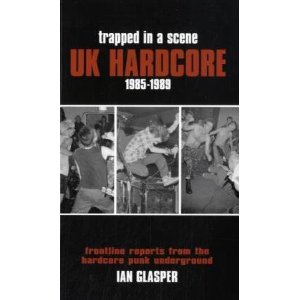
Punk rock continues to inspire and inform me, and there will be plenty more occasions to sing its praises as this blog continues to slowly dredge the 90s and beyond. Anyone interested in some serious nostalgia is directed to Ian Glasper's excellent trilogy of books covering the UK punk scene from 1980-1989, with Trapped In A Scene particularly relevant to the bands featured on Fur Is For Animals.

Tuesday, 16 August 2011

University Year Two, Autumn Term: Wessex News

Kavort magazine may have been a rather inauspicious start to what I was far from convinced would be a career in journalism, but it was still sad when it ceased to exist. I suspect whatever advertising they pulled in didn't make a free paper a viable concern, sadly. However, I had an alternative route to rock journo notoriety rather closer to home, as from the beginning of my second year the music section of Southampton University's student paper Wessex News was now under the control of people from my English course, entitling me to blag what was probably - scratch that, definitely - more than my fair share of promo CDs and gig reviews.

It all began in October 1994, when music editor Karen pressed a copy of Drugstore's single Starcrossed into my eager little hands and asked me if I could go and interview them in Portsmouth. I gave the ten-inch record a spin and thought it was a pretty decent indie ballad, but as I played it over and over I realised that at some point journalistic dedication had been replaced by a real fondness. Brilliantly, when I met them in Portsmouth they turned out to be really nice folk too. There was guitarist Daron, a handsome and friendly chap with great hair, drummer Mike, a tall, wry American who demolished any idea that Americans don't "get" irony... and there was Isabel. Isabel played bass, sang and provided the dark, smoky soul at the band's heart. She was tiny, Brazilian, gregarious, mischievous and an absolute delight.


Drugstore were routinely compared to the Jesus & Mary Chain and Mazzy Star at this point, but they seemed chuffed that I could hear some Galaxie 500 in there. Their set that night was excellent, and included a cover of the Flaming Lips' She Don't Use Jelly which would become something of a live favourite. I completely fell in love with the band, catching them live as often as I could and using Wessex News to encourage Southampton's students to pay them some attention. They were the first band where I knew the majority of the songs from their debut album before it was released, and you can be sure they'll be cropping up in this blog again...


Kitchens Of Distinction have already been mentioned a couple of times, but it occurs to me that I haven't really talked about their music in any great length. They were seen as being on the peripheries of the shoegaze scene, I guess, but they didn't really fit. Apart from having a name at least two words and four syllables longer than most of their peers, their songs were closer to the mid-80s era - more Echo & The Bunnymen than My Bloody Valentine, basically. This Wedgewood Rooms show was the last time I saw them, but also the best, and I've still got a lot of affection for them - and in particular this song.


My next assignment was to go and interview hotly-tipped Scottish rockers Baby Chaos. You will note that in this instance, history has not quite backed up the predictions of the people doing the hot-tipping, but their sparky pop rock did indeed seem rather promising at the time. They were supporting Terrorvision at the university, so I went down and met them beforehand. As an icebreaker, I'd brought down a document which had been doing the rounds called The Purity Test. A lengthy questionnaire of "Have you ever...?" questions based not just on the sex-orientated pursuits suggested in its name but also every conceivable example of immorality and criminality, its humour was essentially defined by its ridiculously comprehensive nature, while the ultimate point was to find out how pure - or, preferably, impure - you were. Now, I certainly didn't have time to go through the whole ruddy thing, but I figured asking them to choose a number between 1 and 500 and asking the corresponding question would be quite funny.

It wasn't, it was just embarrassing. Although, to be fair, this video shoot looks more embarrassing.


Inevitably, The Purity Test lives on...
http://www.puritytest.net/test/500/


Anyway, Baby Chaos may have been nonplussed by this whole idea, but they were good eggs, the interview actually went OK and they were the best band of the night, perhaps not much of an achievement when they were followed by comedy German punks Die Toten Hosen. I'd also tended towards a dislike of Terrorvision, largely on the basis that tunes like Oblivion were, and indeed are, really, really annoying. They always seemed like a band who'd actually be happy to be described as wacky, and despite being covered more (and more favourably) by the metal press than the inkies, it felt like they had more in common with the jauntier end of indie - Dodgy, say - than peers like Therapy?. All that said, there was something quite winning about their obvious lack of pretension, and it's pretty unlikely any Terrorvision fan will have walked out of the university that evening feeling disappointed.

Jesus, somebody's put a one-camera recording of the Southampton university set on Youtube. Here's a lot of topless frontman Tony Wright for your eyes.


The next show I went to was Jawbreaker at The Joiners, but I'm keeping that one back for the next instalment of this blog which, you'll be thrilled to learn, will be a Punk Rock Special. So instead, let's fast forward past my 20th birthday to check out Rub Ultra and The Crazy Gods Of Endless Noise. Yes, we're back in the realm of the wacky. The latter band hailed from Bournemouth, had done a photo shoot with rubber bands wrapped around their faces, had a song called Treacle Tummy Fudge Time Treat and, you won't be surprised to learn, were shit. Rub Ultra were at least a bit better, essentially a funk metal band in the tradition of the little-remembered likes of The Atom Seed and Scat Opera, only with a hint of the dubwise stylings ingrained in the crusty scene.


Just two days later, I was interviewing Trans Global Underground before they played the university. I was struck by how Hamid Mantu (or Hammy, as he introduced himself) had a quietly well-read presence quite distinct from the various indie bands I'd been interviewing, and also by how short vocalist Natacha Atlas (not being interviewed, but sat at a nearby table doing her make-up) was. The show, coinciding with the release of their excellent International Times album, was wonderful, as full of memorable tunes as the stage was of various robed and masked musicians. I think there's a danger that their world dance fusion could be seen as a tad worthy, but as this video shows, they were also prone to arsing about...


1994 held just one more show for me, and I'd like to tell you the year went out with a bang, the best was saved for last, or something equally hyperbolic. As it turned out, this last show was...OK. The headline band were The Sea, except they'd just renamed themselves .Sea, for reasons nobody seemed to know but which almost certainly didn't include avoiding confusion with Cornish duo The Sea, largely because the latter didn't hit the shoreline until well into the 21st Century. I suspect it was because everyone who'd thus far come across The Sea thought they were basically a less successful Levellers, and they wanted people to listen without prejudice. Guess what? They still sounded like a less successful Levellers. Of more interest to me were support band EB & The System, largely because they were on the label Words Of Warning, which I'd got into as a punk label but which had lately been spreading out into the post-crusty scene and signing bands like Dub War and Scum Of Toytown. EB&TS hailed from Basingstoke and played an indie-punk-dub-rap hybrid which I thought worked pretty well. Inevitably, the band split up shortly afterwards. Their Myspace page has 30 friends.

So, as hinted at above, the next blog will discuss punk rock and its part in my downfall, from a tape called Fur Is For Animals to Jawbreaker at The Joiners, and these words: "START A BAND!...WRITE A FANZINE!...PUT ON A GIG!...IF WE CAN DO IT, ANY ONE CAN!!" Until then...

Wednesday, 8 June 2011

Nazis 1994

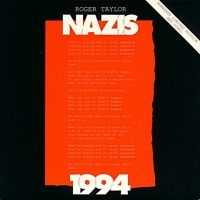
Like the late '70s and, well, RIGHT NOW, the early '90s saw the paranoid and pathetic rabble which makes up Britain's extreme right raise their potato-like heads above the parapet. The rise of the BNP was attacked in song by the people you'd expect: Chumbawamba, Credit To The Nation and Anglo-Asian hip hop crew Fun-Da-Mental were all ready to "Give the fascist man a gunshot", lyrically at least. But the extent of people's concern can be seen by the broadsides from voices you wouldn't expect to hear piping up. Pop Will Eat Itself, a band whose previous work included tributes to an Italian porn star-turned-MP (Touched By The Hand Of Cicciolina), their favourite pop culture references (Can U Dig It?) and, well, "go(ing) downtown to hustle chicks" (the pleasantly-titled Beaver Patrol), hooked up with Fun-Da-Mental for the anti-racist single Ich Bin Ein Auslander, sonically something of a companion piece to their Prodigy collab Their Law. Even more surprisingly, Roger Taylor released Nazis 1994. You know things are serious when Queen's drummer puts out a wholly uncommercial single about holocaust denial, although we could probably have done without his naming one of its versions Schindler's Mix.


In East London, the BNP had scored their first council seat when Derek Beackon won a by-election in Tower Hamlets in September 1993. This would have been shocking anywhere, but in a multi-cultural part of London it seemed particularly worrying; coming only a few months after the racist murder of Stephen Lawrence, it was further proof that the spectre of Nazism wasn't going to go away.

On the 28th May 1994, the Anti-Nazi League organized a march through South London, culminating in a gig in Brockwell Park. Depending on your source, the march attracted between 100,000 and 200,000 people, with up to 250,000 showing up for the gig. A small number of those folks were me and assorted chums, including members of Carp Fever and some of our mates from Chamberlain Hall. While we were all assuredly opposed to the BNP, it's probably fair to say that the music on offer played a decisive part in encouraging us to London for the day. Carp Fever faves The Levellers were headlining, alongside performances by the Manic Street Preachers, Credit To The Nation and Urban Species. Also listed on the bill was a special guest, which dedicated Queen fan Matt Ross assumed would surely be Roger Taylor. At one point in the day, he did surprise Lucy by exclaiming "Roger Taylor!", but he was only referring to a poster for Nazis 1994, and it turned out that the special guest was Billy Bragg. His wasn't the only disappointment of the day, mind; we had to leave before the Levellers to catch our coach back to Southampton, obviously booked by people who were more concerned with the march than the bands.

A less political moment of summer 1994 was the decision Sophie and I made to go to Reading instead of Glastonbury, thus establishing a pattern of alternating between the two big festivals which I stuck to throughout the rest of the decade. I suspect our choice in '94 was influenced by the festivals' respective bills; where Glastonbury's delights sometimes seemed to be spread thinly across a multitude of stages, Reading was all about the alternative rock that made up the foundation of what I was into. That said, one of the first bands I can remember seeing that August weekend was our old favourites Trans-Global Underground, clearly more of a Glasto-friendly outfit. But the festival's first day was somewhat dominated by the presence of Hole; Kurt Cobain had only been dead a few months, and what felt like the entire festival turned up to see whether his widow would implode on her return to active service. There was a weird atmosphere; if everyone was united in their love of Nirvana, they were distinctly split in opinion when it came to Courtney Love, and it felt like the rubberneckers who wanted to watch her public self-immolation outnumbered those who were looking forward to hearing Beautiful Son and Miss World. I certainly wasn't in the former camp, and it proved too painful to watch her stagger through her back catalogue in a wrecked, wretched state. To be fair, Courtney made it through the whole set, but I didn't. Not sure where I went, but I was back for Pavement's set, which made me smile a lot, particularly with the anti-Pumpkins and Stone Temple Pilots lyric on Range Life seeming so appropriate at the festival which had seemed like the UK's home of grunge. Eschewing the main stage headliners Cypress Hill, we went to see The Wedding Present close the first day on the Melody Maker stage. I was a big fan of their Bizarro and Sea Monsters albums, along with the twelve singles they'd released throughout 1992, but latest album Watusi, while still quite good, was clearly a more lightweight affair than its predecessors. Obviously, they played quite a lot of it, which made their set a little disappointing. That said, Weddoes frontman didn't deserve to get punched by Courtney Love, an event provoked not by poor set list choices but, according to legend, because he knew Steve Albini.

Saturday began with the Reverend Horton Heat, the sort of act which would never get on a Reading main stage bill in the 21st century...which is the 21st century's loss really, as hell-raising punkabilly is a good way to start the day.


Next up were Kitchens Of Distinction, who I maintain were a great band. I say this despite discovering many years later that my future bandmates Jimmy and Steen were watching them and considered them one of the lamest bands imaginable. A harder-hitting performance by anyone's reckoning came from Fun-Da-Mental, bringing their hardline politics and thrilling hip hop to the indie kids. I don't remember seeing anybody else on the main stage that day, despite the rest of the afternoon and evening including heavy hitters Pulp, Radiohead, the Manics, Ice Cube and headliners Primal Scream. The thing is, I also don't remember watching Superchunk, Compulsion, Elastica or Madder Rose on the Melody Maker stage. I don't think I was wasted, but I have no memory of seeing any of those bands that year. I do, however, remember who Sophie and I went to see instead of the Primals or Madder Rose: Frank Sidebottom.


As it so often was, Sunday was rock day at Reading 94, although the state of rock in those still-post-Nirvana years meant it was scarcely less varied than the other days. Soundgarden had pulled out for some reason or another, but instead of replacing them with a band of similar stature, the organizers moved the bill up and shoved Collapsed Lung on the bottom of the bill. These rock-friendly Essex rappers were a bit useless, but one of the two frontmen made me laugh by introducing himself as Chris Cornell... The only real mark Collapsed Lung left on popular culture was Eat My Goal, a tune which will probably still be getting included on football-orientated compilation albums released to cash in on the World Cup when we're all dead and gone. Incidentally, one Collapsed Lung frontman is now Radio 1/1Extra DJ Nihal, while the other is doing this...

To demonstrate the array of bands united under the rock banner that year, Cop Shoot Cop were up next with a nihilistic blast of pre-gentrification New York noise, the sort of act which would never get on a Reading main stage bill in the 21st century...which is the 21st century's loss really. This tune isn't the best they played, but it is the only one I could find, and at least Tod A's shirt fits into the title of this chapter...


We'll sweep Stabbing Westward under the carpet and pretend that the next act on was Chicago's premier noiseniks The Jesus Lizard. This band were just INCREDIBLE. Their music was at once slinkily rhythmic and prone to bursts of jagged violence, and I'd never seen a frontman quite like David Yow, a shirtless shit-kicker somewhere between Iggy Pop and Dennis Hopper's character in 'Blue Velvet'. At one point, I looked up from my moshing and suddenly realised that Yow's crowdsurfing body was inches away from my head. I don't think I was particularly near the front, so he must have gone on quite a journey. They really were the sort of act which would never get on a Reading main stage bill in the 21st century...which is the 21st century's loss really, as there was more danger and excitement in one of their songs than in most of the main stage bill of a 21st century Reading put together. One of the coolest things Nirvana ever did was honouring a pre-fame agreement and releasing a split 7" with the Jesus Lizard at the height of the former's success. As Nirvana didn't bother with a video for Oh! The Guilt, a few seconds of The Jesus Lizard's Puss made it on to Top Of The Pops. Here's some poor quality footage of them doing it at Reading. This is their hit, remember...

Professorial-looking New York riff-masters Helmet made it a hat trick of fantastic American alternatives (we're forgetting Stabbing Westward, remember), but I think by this point Sophie may have been experiencing noise fatigue, so we went off to do something less eardrum-battering instead. After that, The Wildhearts' set was notable for two reasons: the presence of one Devin Townsend, now a cult figure in his own right but then primarily known for singing with Steve Vai, on guitar, and the fact that bassist Danny dislocated his knee within the first few seconds of the set but managed to get through the whole thing before seeking medical assistance. This is that first tune, their 'Only Fools & Horses' theme tribute Caffeine Bomb, and you can see the point when Danny goes down about 35 seconds in (and the look of pain on his face whenever the camera returns to him).
I think while the Afghan Whigs were playing, we might have been having an argument. Sophie had a minor panic attack triggered by crowds and dust, and I reacted in the martyrish way which will be familiar to subsequent girlfriends (and possibly some workmates). "Well, we may as well just go back to the tent and miss the rest of the bands, then," was my thoughtful riposte. Luckily, Sophie didn't call me out on my bullshit (or my obvious bluff) and things were better by the time Senser came on. This band have been discussed at length in previous blogs, so I won't go on again, but it was great to see them so high up the bill and I danced myself silly. Here's the nostalgia bomb known as Age Of Panic.

Henry Rollins and his Band were a pretty intimidating presence, particularly when Hank did an impromptu speech about how much he liked England, its food, its bands, etc, leading sarcastically into Liar. Sadly, I couldn't locate any footage of that, so here's Disconnect instead. Its lyrics, all about wanting to pull one's own brainstem out, are clearly what sunsets were made for.
 

With Soundgarden out of the picture, Therapy? were promoted to the penultimate slot on the main stage, which could well mark the high water mark of their entire career. They were pretty much my favourite band at that point, riding high on the back of Troublegum. Page from Helmet and Lesley from Silverfish both came out for the tunes on which they guested on the album and it felt, to all intents and purposes, like a headline set, particularly as me and Sophie weren't too bothered about seeing the actual headliners and ended up watching the Chili Peppers disinterestedly from a point so far back we were probably nearer our tent. One thing about Therapy?, though: they did something I'm not too into, where they did a medley of some of their older tunes instead of playing them in full, a token gesture for the pre-Troublegum fans in attendance. Typically, that's the video I'm posting here, apparently recorded for Spanish (?) TV.
 

That was it for Reading, but as with the previous year Simon and I made it to Pilton for their end-of-summer village fete. I'm pretty sure Trans-Global Underground played, but I can't remember anyone else. This was entirely my own fault. Simon, his girlfriend Sarah and I had bought a quantity of booze, which we couldn't take into the marquee where the bands were playing. In rather gung-ho fashion, I mixed the rest of my cider (maybe a litre or so) with whatever gin Sarah had left and proceeded to down it. I then spent most of the evening sitting against the side of the marquee trying to hold it together. I think this was when Sam Ogilvy, a kid I went to school with between '83 and '88, wandered up to say hello, obviously discovering that I was in no state to maintain a conversation. When Simon drove us back to my folk's house, I got out of the car and immediately threw up. If my folks ever knew it was me - and there is no good reason why they wouldn't - they kept it to themselves. Embarrassingly, this wouldn't be the last time I'd be sick in the vicinity of Simon's car, but you're going to have to wait until we get to 1997 for that story.

Drawing a line under that unfortunate incident, next time I'll be striding manfully into my second year, asking Baby Chaos rude questions, falling in love with Drugstore, marvelling that funk metal is still a going concern with Rub Ultra, enjoying even more Trans-Global Underground and Therapy?, catching the tail end of the crusty scene with The Sea... and the small matter of my first DIY punk show. See you back then.

Thursday, 14 April 2011

Sons Of The Stage Part 2: Carp Fever

When Nine Inch Snails split up at the end of the Sixth Form, it felt like we were beginning to get somewhere. Not in terms of any real success, of course; we'd only ever played within the school grounds, and it was unlikely that we'd attracted the attentions of anyone beyond our circle of friends. However, the small repertoire of original material we'd built up had given me a taste of being in a band, something at which I was keen to have another bash.

Consequently, when I got to university I was quick to drop into conversation that I played guitar and would really quite like to start a band. This rather backfired when a socially awkward character asked me to play in his industrial combo. I can't remember the guy's name now, but he was possessed of a blank-faced charmlessness which, as it turned out, was allied to an almost-total lack of understanding of how to go about putting a band together. My justification for saying this is that he also approached a guy called Andy to play drums. Now, by his own admission, Andy couldn't play drums, but to our now-nameless friend this was less significant than the fact that Andy was a burly fellow with a Travis Bickle-style mohawk. "All you'll have to do is hit a metal bin with some spanners," was the would-be svengali's advice, which almost says as much about the public perception of industrial music in 1993 as it does about the cretin that uttered those words. I'm surprised he didn't also ask around to see if anyone had any power tools.

It might not surprise you to learn that this band never actually happened.


Instead, I fell in with a group of eager young musicians from Chamberlain Hall. The line-up was Alex on acoustic guitar and vocals, myself, Lee and Andy (not the mohawked one) on guitars, Lucy on bass and Ella on drums. Those of you with a keen interest in counting will have noticed that this collective included a staggering four guitar players, and from this, anybody who knows the more extreme ends of my musical taste may be forgiven for assuming that this band would deal in apocalyptic soundscapes characterised by in-the-red volume and total sonic overload. It didn't, though. It really didn't.

The tastes which fed into our band were pretty varied, while rarely straying from the middle of the road. Alex was the biggest Crowded House fan in his home county of Cheshire. Lee and Andy liked Bon Jovi and could always be relied upon to whip out their acoustics for a run-through of Extreme's More Than Words. Lucy liked indie and funk and, having been drowned out by a guitarist in an old band back in Market Harborough, was keen to ban distortion pedals from our set-up (an edict which I'm afraid I ignored). I'm afraid I don't remember what Ella was into, but as she shared strong Christian beliefs with Andy, it's probably fair to assume that death metal wasn't really her sort of thing.


I don't remember the discussions about what she should call ourselves, but I do know how we came to choose our name. Our friend Matt Ross was keen on fishing and was accumulating knowledge from various published works, including the unmissable tome 'Carp Fever'. Matt thought this would be a splendid name for our band, and it appears that we agreed. After the various names used by my school band, I was used to a certain silliness in this area, and in truth I still kinda like it. It's got the right sort of randomness for an indie band, and if somebody were to emerge with this name in 2011 I could well imagine Radio One DJ Huw Stephens saying the name in his lovely Welsh accent. That said, I was always sensitive to the idea that sooner or later some wag would swap two of the letters around to pass judgement on our skills...

Incidentally, Matt also possessed another fishy book by Bob Nudd, by the name of 'My Way With The Pole', which I earmarked as a potential album title. As we shall see, however, its services were never required...

The public debut of Carp Fever took place in Chamberlain Hall, in a space which I don't recall having a name. It was the room between the dining hall and the bar, and as such was principally used by people waiting to get fed or shit-faced. One evening, possibly in the summer term, the six of us occupied one end of it to perform a repertoire of songs we could all just about agree on. I'm pretty sure we played a Crowded House tune. We definitely did U2's Mysterious Ways, because I overheard one of Andy's friends saying afterwards that we'd "murdered it". At the time, I thought this was a little unfair; the way I got round not owning a wah-wah pedal by using my distortion and some palm-muting was surely a new dawn for guitar experimentation. Looking back, however, I suspect Andy's friend was right. We also did some Levellers stuff, including a version of Sell Out in which I "took the mic" for the shouty bit in the middle eight, prompting observers to note that I handled it as if I was in Slayer. I'm fairly sure they meant it as a compliment. I know we did a version of Parklife with name-giver Matt Ross doing the Phil Daniels bits. Beyond that, I'm really not sure.

We did write some originals, too, which may have appeared on the setlist. I'd written a couple: there was Cornwall, which the rest of the band tended to refer to as The Oystercatcher, as the word Cornwall never figured in the actual lyrics - I think I thought that was quite a Wedding Presenty thing to do (as in their tunes Rotterdam and Granadaland). It was about the holiday I'd had in Cornwall the previous summer, and how friendship lasts forever. (This has proven true in part - of the people I went to Cornwall with, Simon was my best man last year, Ben has been a vocal supporter of this blog...Lucy's my friend on Facebook...and, OK, I have no idea what Natalie's up to these days.) Figure In The Landscape, meanwhile, was based on the novel 'Tess Of The D'Urbervilles' - clearly at this point in my life I thought that what rock music needed was more of a Thomas Hardy influence.


At some point towards the end of the first year, Lee and Andy both left Carp Fever. There was no animosity - they were both sweet guys, and Ella would live with them in the second year - I suspect their reasons went along the lines of wanting to concentrate more on studies and playing More Than Words, and maybe they were fed up of being drowned out by my cack-handed usage of a distortion pedal. The newly streamlined Carp Fever ventured out of our comfort zone to play a pub called The Dorchester Arms, which would assume greater significance for me many years later when venerable Southampton indie DJ Hammy started his Saturday night residency there. We got the gig because Lucy knew some guy in a local indie band who needed a support, and the whole affair was fairly dispiriting. Any of our friends in attendance were outnumbered by stony-faced locals who were watching some sort of sporting entertainment on the TV screen above the stage. Lucy's friend's band were entirely forgettable, and nicked my distortion pedal. (I don't think Lucy put them up to it).


That ended up being it for Carp Fever. Although Lucy, Alex and I shared a house in the second year (along with our friend Gail), we never quite got motivated to give it another go. I guess the convenience of having a free room in which to rehearse in halls meant it seemed a right old hassle to arrange practice space out in the real world. Students, eh?

A few years later, Lucy and Alex got another band together who continued in the indie/folk/pop vein Carp Fever had hinted at. They were called Barrington and did much better than us, getting a CD out and actually building some sort of fanbase. Here's their Last FM page: http://www.last.fm/music/Barrington. Don't be put off by the fact that "similar artists" include Kinky Brothers and Jock's Trap.

I've lost touch with Andy, but having made Facebook friends with Lee I'm delighted to find that he's as lovely a fellow as he was back then - and that despite living with Christians for most of his time at uni he's a self-proclaimed atheist/humanist. Hopefully he'll forgive me for the More Than Words-orientated mockery above.

Ella ended up being the most successful musician to have a stint in Carp Fever on her CV. After uni, she returned to her native Devon, where (curiously, at around the same time Lucy and Alex formed Barrington and I joined a band called The Gilamonsters) she ended up playing in Buffseeds, an indie pop band who came tantalisingly close to success in the early 2000s. Here's a strangely curtailed video of their best known tune...

And as for me... well, it was five years before I joined another band, which means I won't be writing about it here for some time. However, with tales of fetish nights, an altercation with the original lead singer of Iron Maiden, the offending of a Tom G. Warrior lookalike, the clearing of an indie disco, Valentine's Day in Camden, The Frequently Late Guitarist and communicating with Japanese musicians through the power of the air guitar, The Ballad Of The Gilamonsters will surely be worth the wait...